

Connected maintenance tracking software for high-output plants
Track every work order, technician, and spare part in the same system that tracks production, so maintenance data never surprises the plant floor.
Track and manage maintenance
Simplify maintenance tracking and connect activities with other departments.
-
Built for the shop floorWith reports to the officeWith reports to the office
-
Real-time visibilityEvery asset and technicianEvery asset and technician
-
Complete audit trailsTotal accountabilityTotal accountability
-
Track partsNot just laborNot just labor
-
Synch with productionNot a separate systemNot a separate system
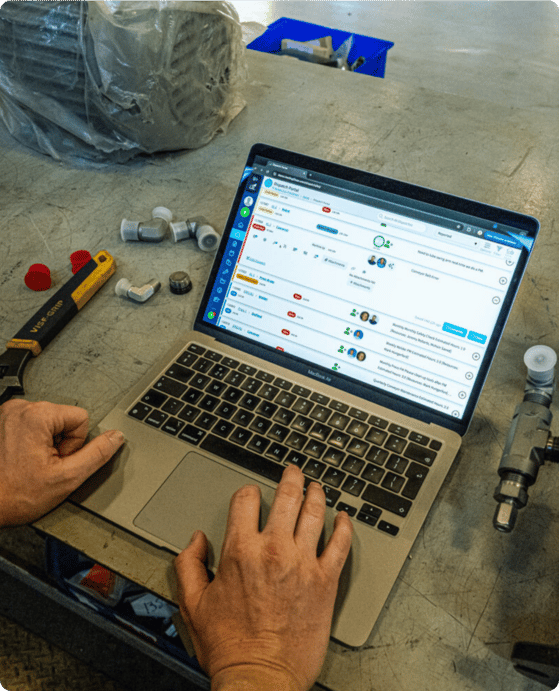
Legacy tracking tools were built for admins reviewing reports after the fact. L2L’s maintenance tracking software is built for the technician doing the work, with management getting the same data in real time, not a delayed summary.
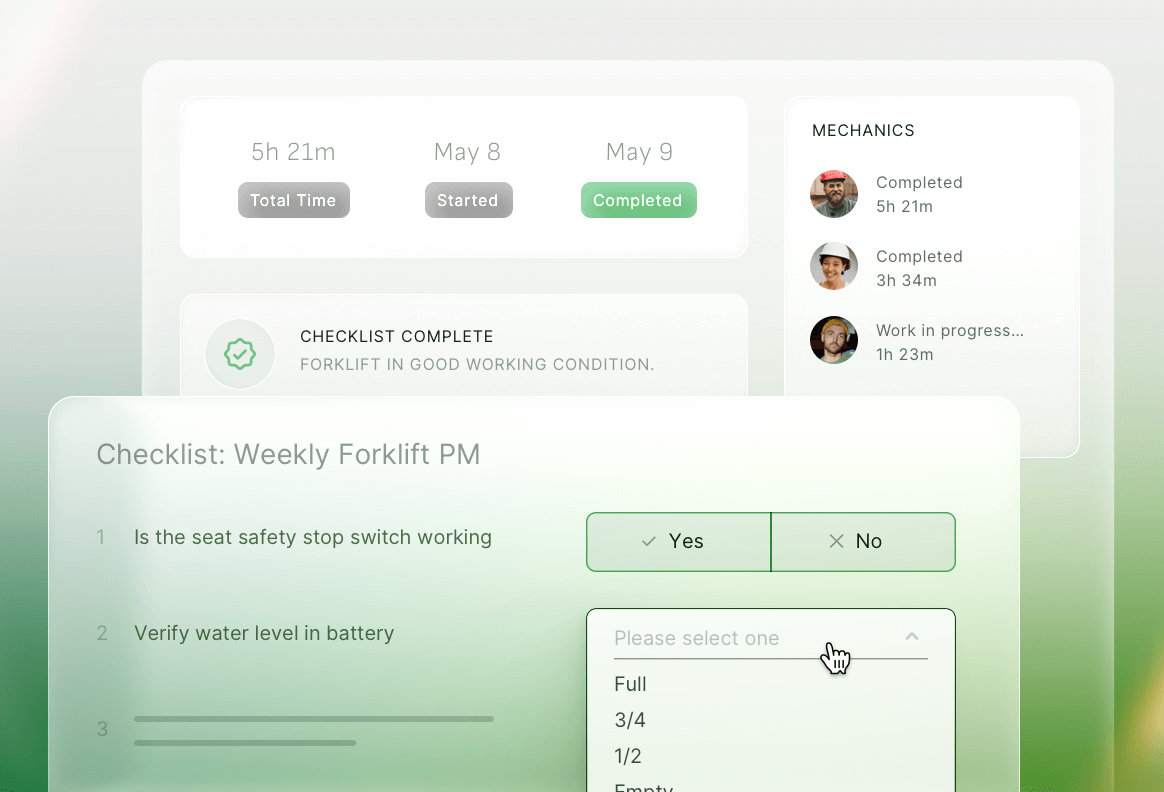
See who's working on what, the status of every machine, and where bottlenecks are forming, live, not in tomorrow's report.
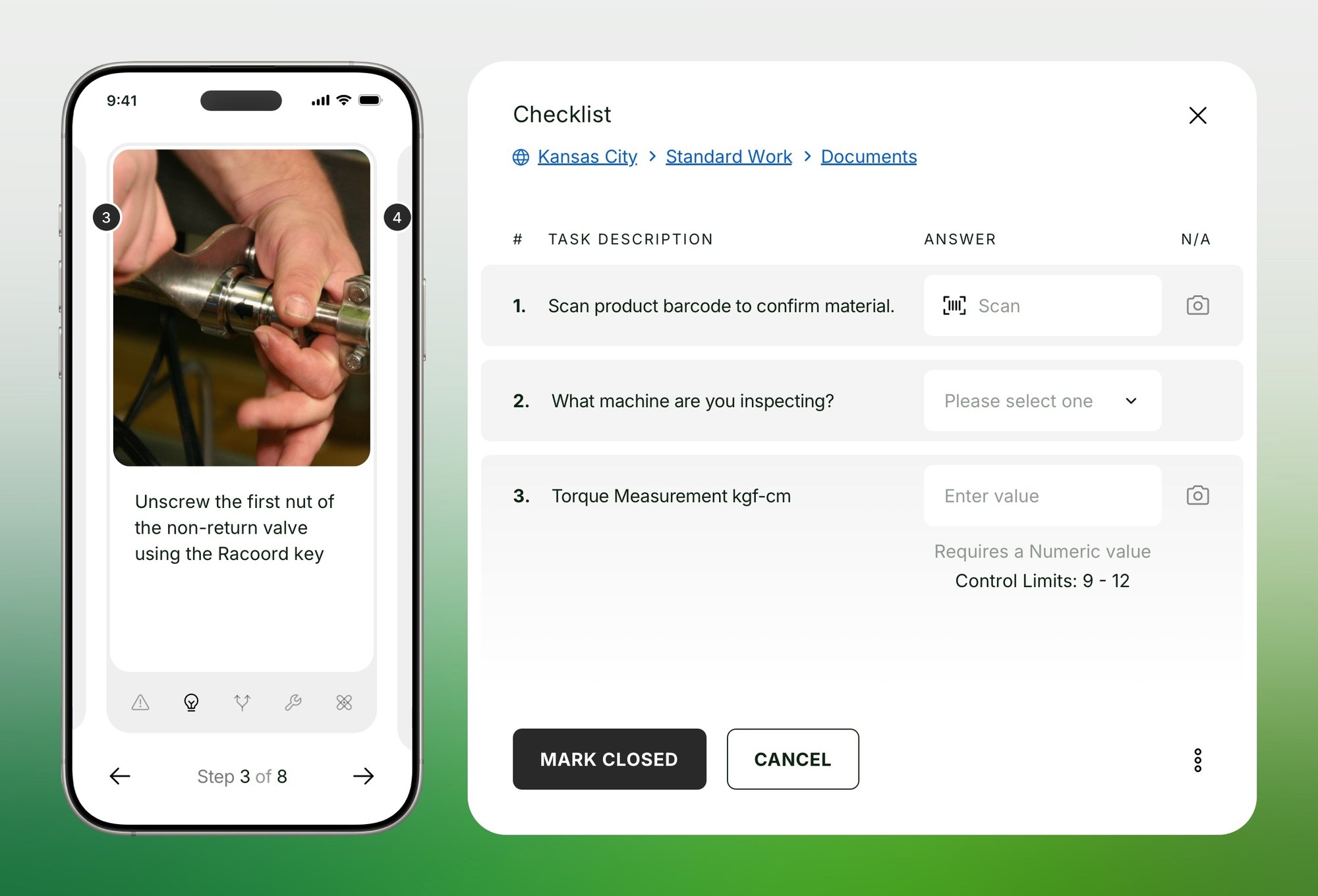
Digital checklists tied to work orders and dispatches build a completion record automatically,
ready for a safety or quality review without reconstruction.
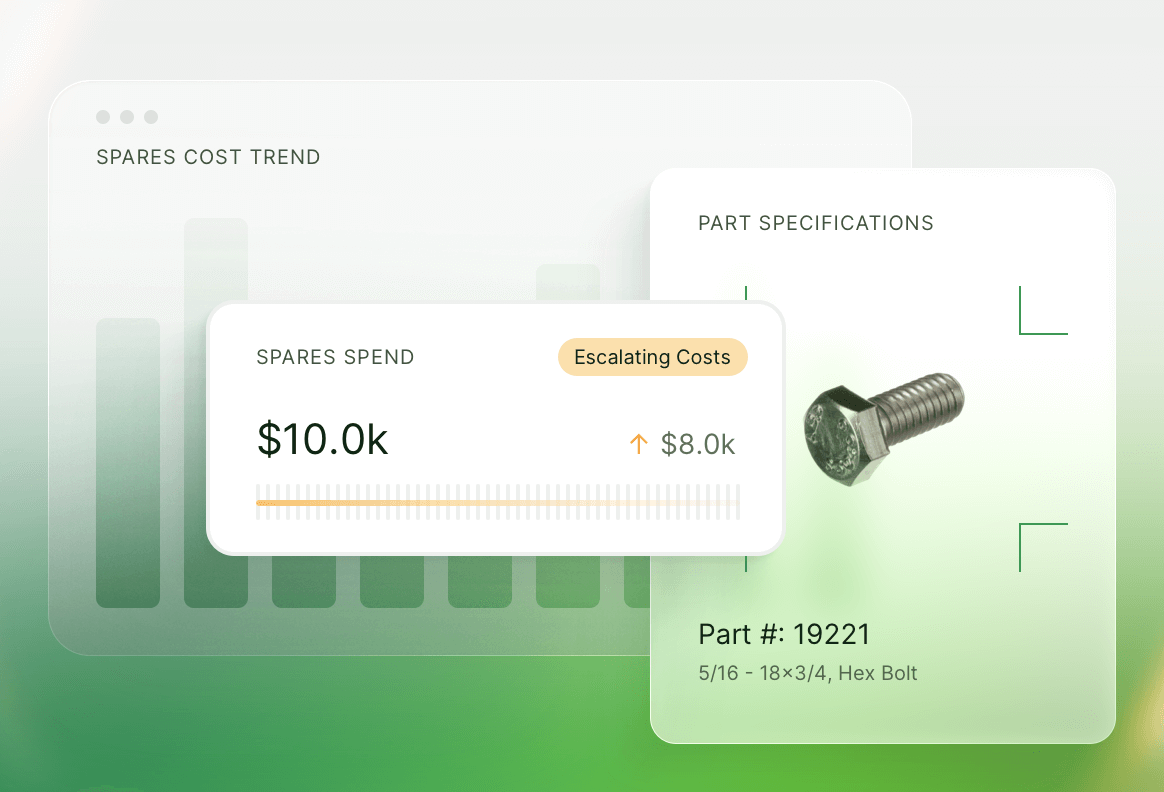
Spare part usage and cost track against work orders as they happen,
so the true cost of maintenance includes materials, not just hours.
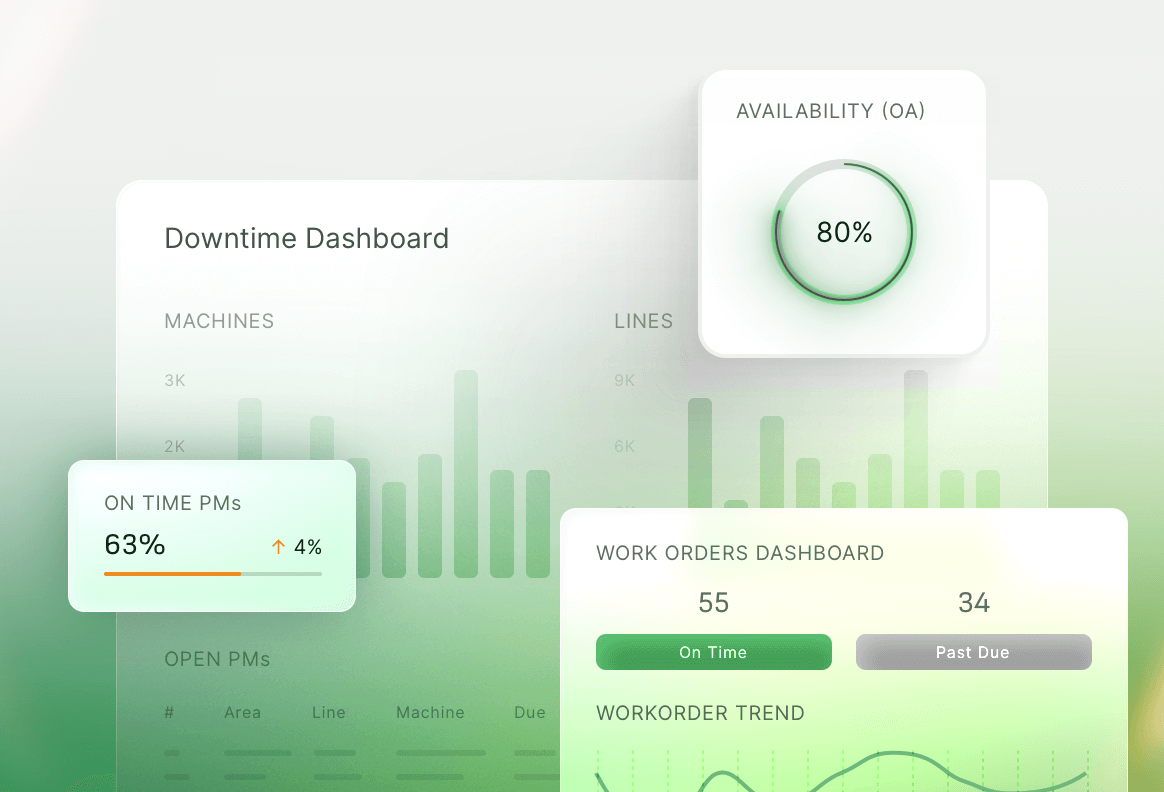
Maintenance tracking lives inside the same system that tracks production, so a repair never surprises the production team. This is maintenance tracking management the way it should work, not a separate island of data reconciled after the fact.
-
Built for the shop floorWith reports to the officeWith reports to the office
Legacy tracking tools were built for admins reviewing reports after the fact. L2L’s maintenance tracking software is built for the technician doing the work, with management getting the same data in real time, not a delayed summary.
-
Real-time visibilityEvery asset and technicianEvery asset and technician
See who's working on what, the status of every machine, and where bottlenecks are forming, live, not in tomorrow's report.
-
Complete audit trailsTotal accountabilityTotal accountability
Digital checklists tied to work orders and dispatches build a completion record automatically,
ready for a safety or quality review without reconstruction. -
Track partsNot just laborNot just labor
Spare part usage and cost track against work orders as they happen,
so the true cost of maintenance includes materials, not just hours. -
Synch with productionNot a separate systemNot a separate system
Maintenance tracking lives inside the same system that tracks production, so a repair never surprises the production team. This is maintenance tracking management the way it should work, not a separate island of data reconciled after the fact.
Features for modern
maintenance tracking
Maintenance tracking software that helps you visualize what happened - and what's coming next, all connected to the flow of work.
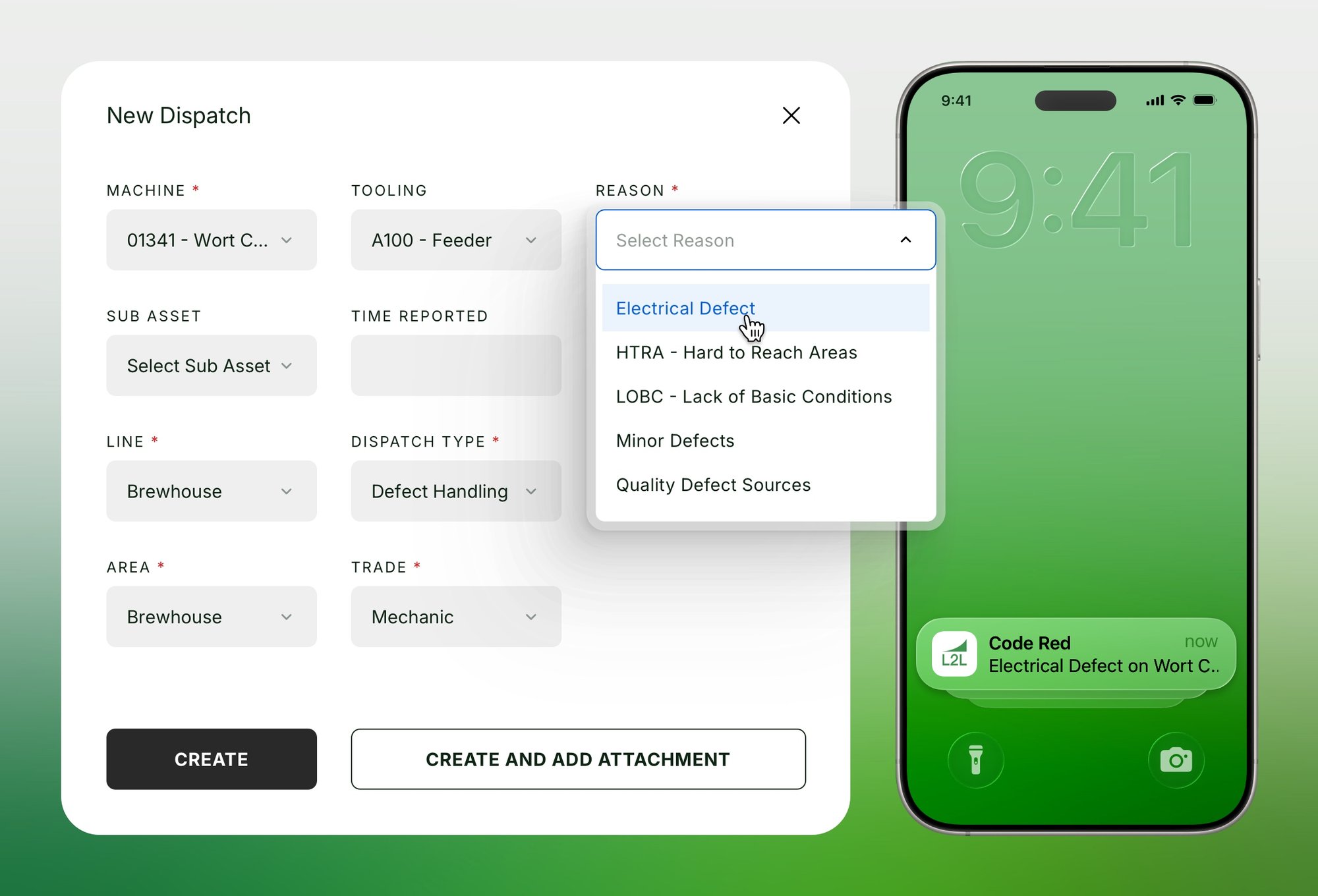
Requests route automatically to the right approver, with status tracked end to end. Technicians update status and log time from a mobile app, not a desktop at shift's end.
Track not just that a machine is down, but why, using standardized reason codes for root-cause analysis.
Average response time, on-time PM percentage, and PM compliance are calculated automatically from your data.
Track estimated versus actual hours on every work order, and see the split between reactive and proactive work.
Monitor spares spend and cost trends against work orders as parts are consumed.
For cycle-based PMs, we calculate the machine's actual cycle rate from its PM history and project a due date with a confidence score.
Digital checklists tied to work orders and dispatches build a completion record for safety and quality audits.
Chad from West Liberty Foods
"L2L has not only saved us money, but it has also improved our processes and made us more productive with the resources we have."
Steve Thompson
"The maintenance teams really like L2L. We feel like we're getting value for our investment."
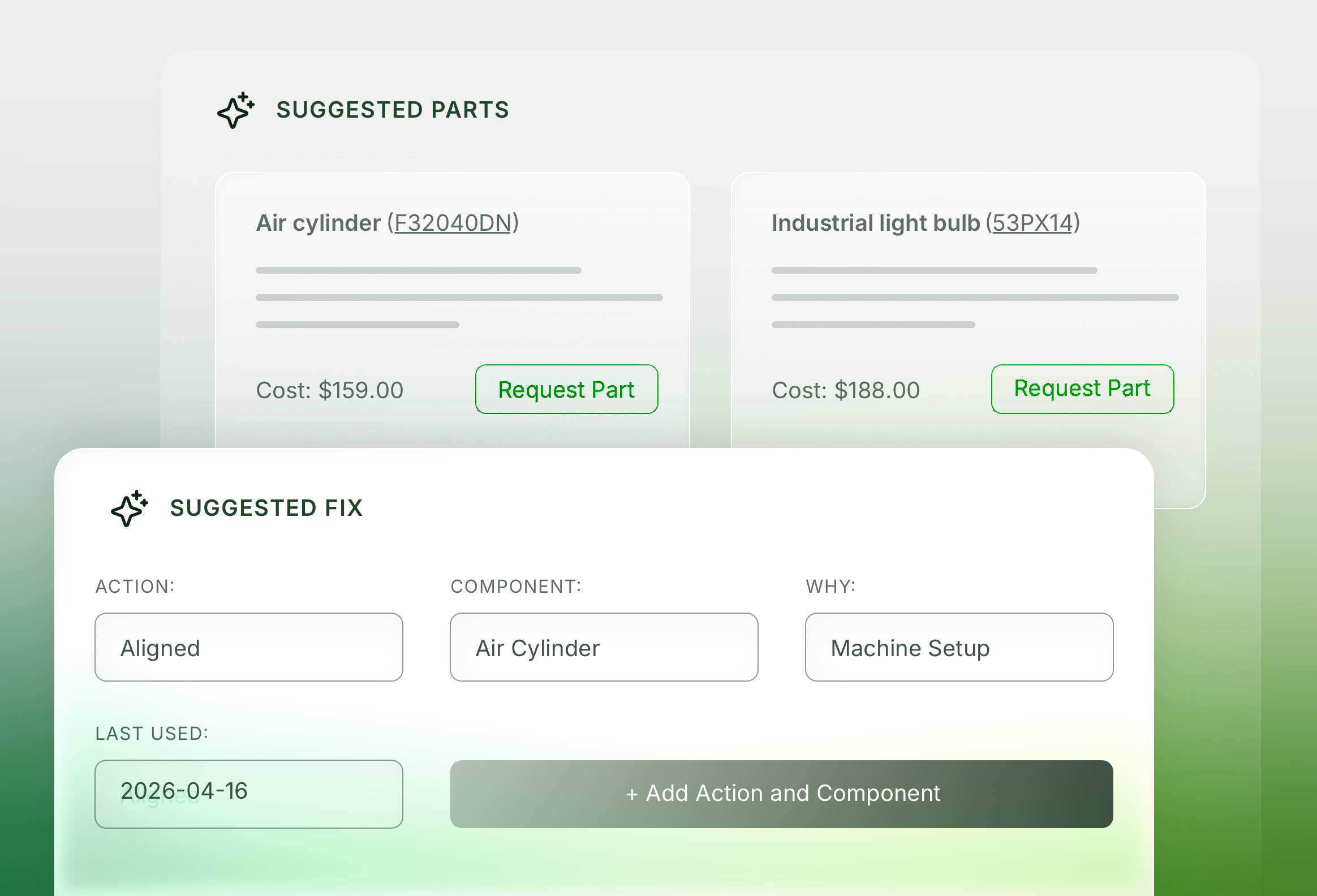
Get suggested fixes
L2L Execution AI gives you the suggested fix to a problem, based on what solved the issue last time.
Maintenance tracking and much more
Maintenance Management
Coordinate work orders, PMs, and spare parts in one system built for maintenance teams.
AI in Maintenance
AI’s role in proactive maintenance and how to incorporate intelligent technology into your maintenance strategy.
CASE STUDY:
Mueller's proactive maintenance
Improved maintenance tracking with better communication and visibility.
The Smart Manufacturer's Guide to Buying a CMMS
FAQ about maintenance tracking
Find out how L2L improves maintenance tracking, enhances visibility across plants, and ties directly to your existing workflows.
What is maintenance tracking software?
Maintenance tracking software tracks work orders, technicians, parts, and equipment status in real time, connecting maintenance data to production data instead of keeping it in a separate system.
How is maintenance tracking management different from a spreadsheet?
Maintenance tracking management provides real-time updates, automated notifications, and centralized data across every technician and machine, something a spreadsheet can't do without someone manually updating it.
Can maintenance tracking software track maintenance across multiple factory sites?
Yes. Maintenance tracking software can give a global view across sites, so plants can be benchmarked against each other on the same standard, not compared informally.
How does tracking labor hours in maintenance tracking software help reduce costs?
Maintenance tracking software can reveal how much time goes to reactive versus proactive work, so wasted time and frequent reactive repairs become visible and addressable, instead of invisible until a budget review.
Can maintenance tracking software predict when a PM is actually due?
Yes. For cycle-based PMs, maintenance tracking software can calculate a machine's actual cycle rate from its completed PM history and project a due date with a confidence score, instead of relying on a fixed interval guess.
How does equipment maintenance tracking work?
Equipment maintenance tracking logs every action taken on a piece of equipment, work orders, PMs, inspections, and repairs, tied to that specific asset's history. When an issue comes up, it's logged as a dispatch, an operator flags it, or a scheduled PM triggers it. Then, it routes to the right technician automatically. As work happens, labor hours, spare parts used, and completion status get recorded against that job in real time, not written down after the fact. Over time, this builds a full maintenance history per asset: what broke, how often, what fixed it, and how long it took, which is what makes KPIs like MTTR and PM compliance possible to calculate accurately instead of estimated.
What are the best maintenance tracking tools?
The right tool depends on what you're actually trying to solve, but the strongest maintenance tracking tools (like L2L) share a few traits: they capture data automatically instead of relying on manual logs, they connect maintenance activity to production data (so a repair doesn't happen in a vacuum from what's actually running), and they calculate KPIs like MTTR, MTBF, and PM compliance directly from real work order data rather than a spreadsheet someone updates weekly. A standalone CMMS handles the maintenance side well but often sits disconnected from production. Look for a system where maintenance and production share the same data, since that's usually the difference between a tool that tracks history and one that actually helps you act on it in real time.
What maintenance KPIs should I be tracking?
The core set most maintenance teams should track:
- MTTR (Mean Time to Repair) = how long it takes to fix an issue once it's identified
- MTBF (Mean Time Between Failures) — how often a piece of equipment fails, a reliability signal
- PM Compliance / On-Time PM % = whether preventive maintenance is actually happening on schedule
- Average Response Time = how long it takes a resource to respond once an issue is logged
- Downtime by cause = not just how much downtime occurred, but why, using standardized reason codes
- Spares spend and cost trend = whether maintenance material costs are trending up or down over time
- Estimated vs. actual labor hours = whether jobs are taking longer than planned, and where
None of these are useful in isolation. MTTR without downtime-by-cause just tells you something's slow, not why. The value comes from tracking them together, in one connected system, so a spike in one metric can actually be traced back to a cause in another.
Ready to eliminate downtime?
Discover how L2L delivers real-time guidance to frontline teams, unified control for operations leaders, and measurable insights for global executives.
Manufacturing Intelligence