Smart factory software that
tells you what to do next
... not just what happened
Data tells you what happened. L2L Execution AI tells you what to do next, drawing on one connected dataset across production, maintenance, and training instead of three disconnected systems.
The smart way to connect
your operations
Full visibility across maintenance and production, with the manufacturing intelligence layer to make it actionable.
-
Be ahead of tomorrow's problemProactively plan, todayProactively plan, today
-
See what's driving breakdownsFull visibilityFull visibility
-
A real recommendationNot just a chartNot just a chart
-
One connected datasetMaintenance + productionMaintenance + production
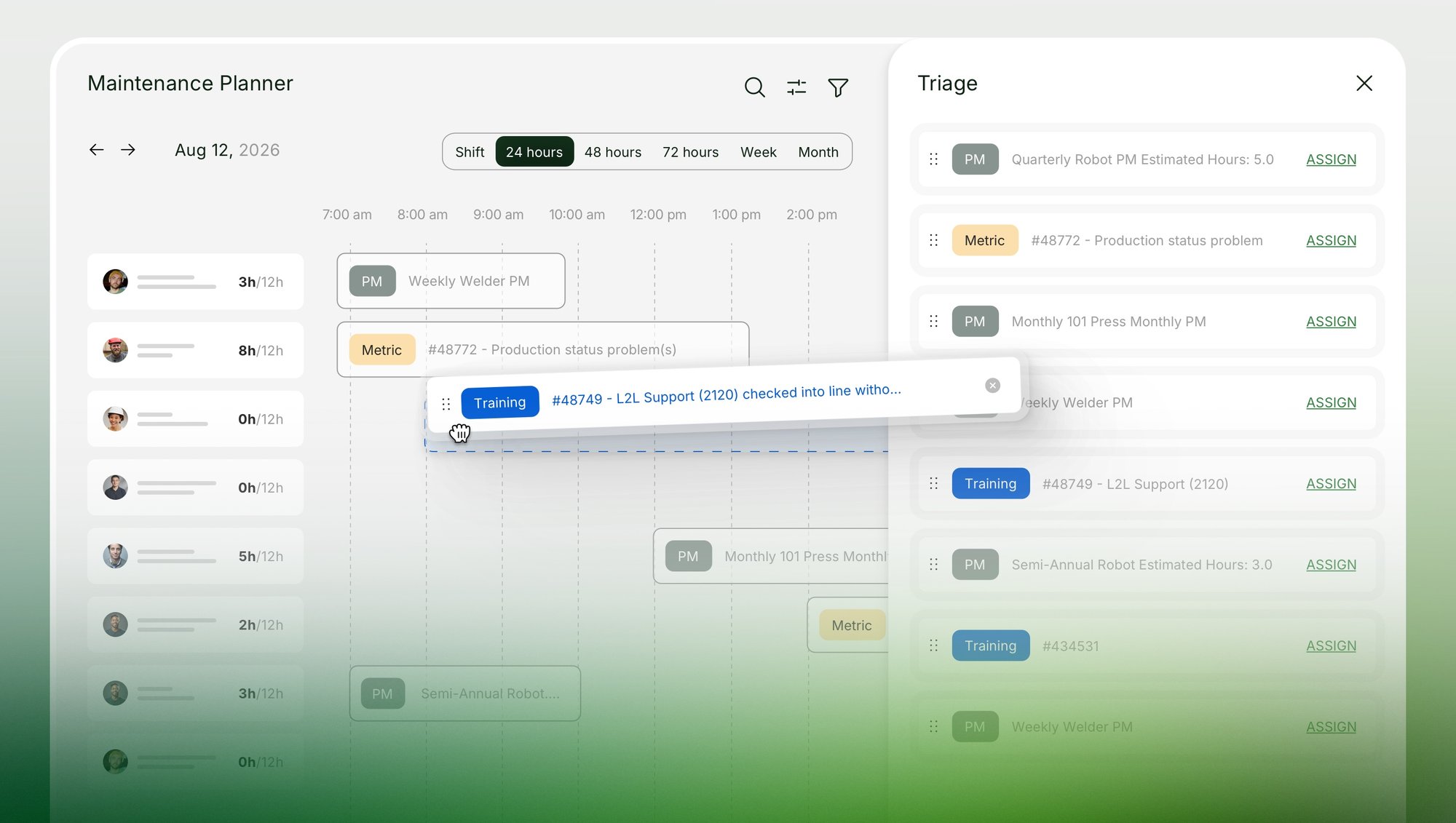
Real-time dashboards and predictive maintenance due dates mean you're not just seeing downtime and PM compliance as they happen. You're seeing what's likely to break before it does.
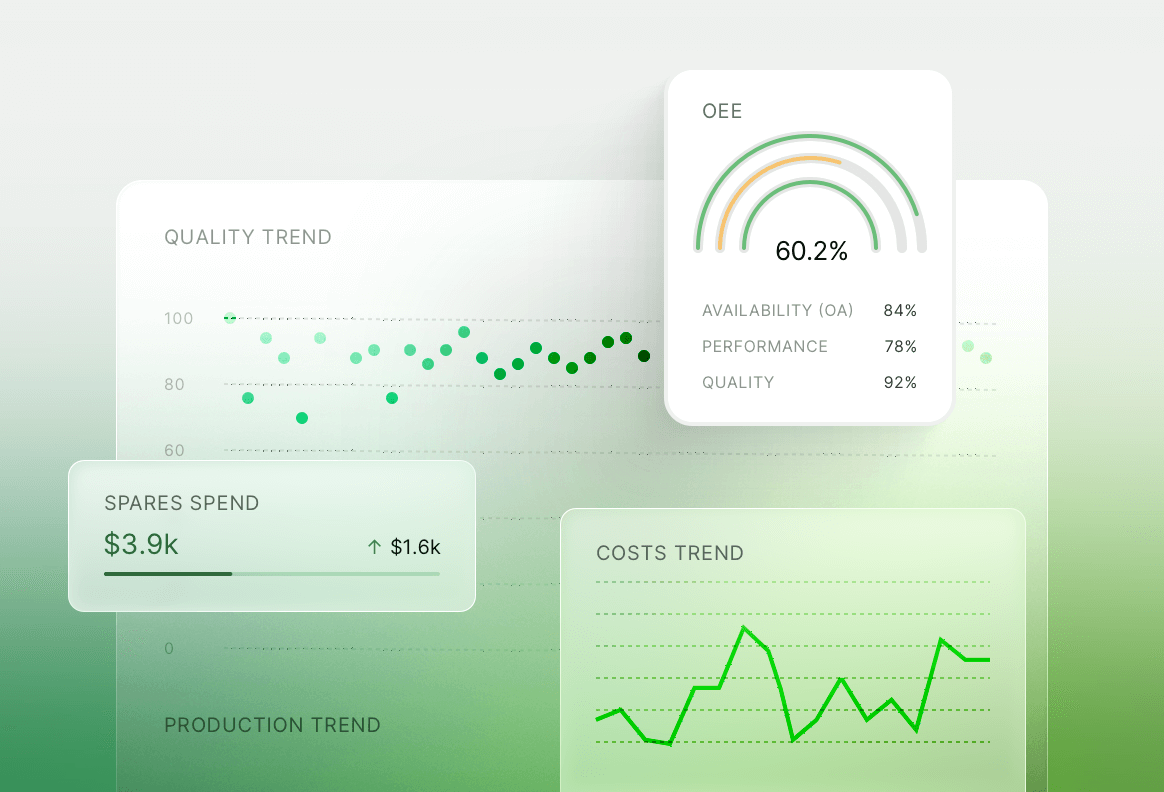
AI-powered PM Effectiveness Analysis and Machine Analysis show whether preventive maintenance is reducing failures and pinpoint what's really causing a machine's breakdown pattern.
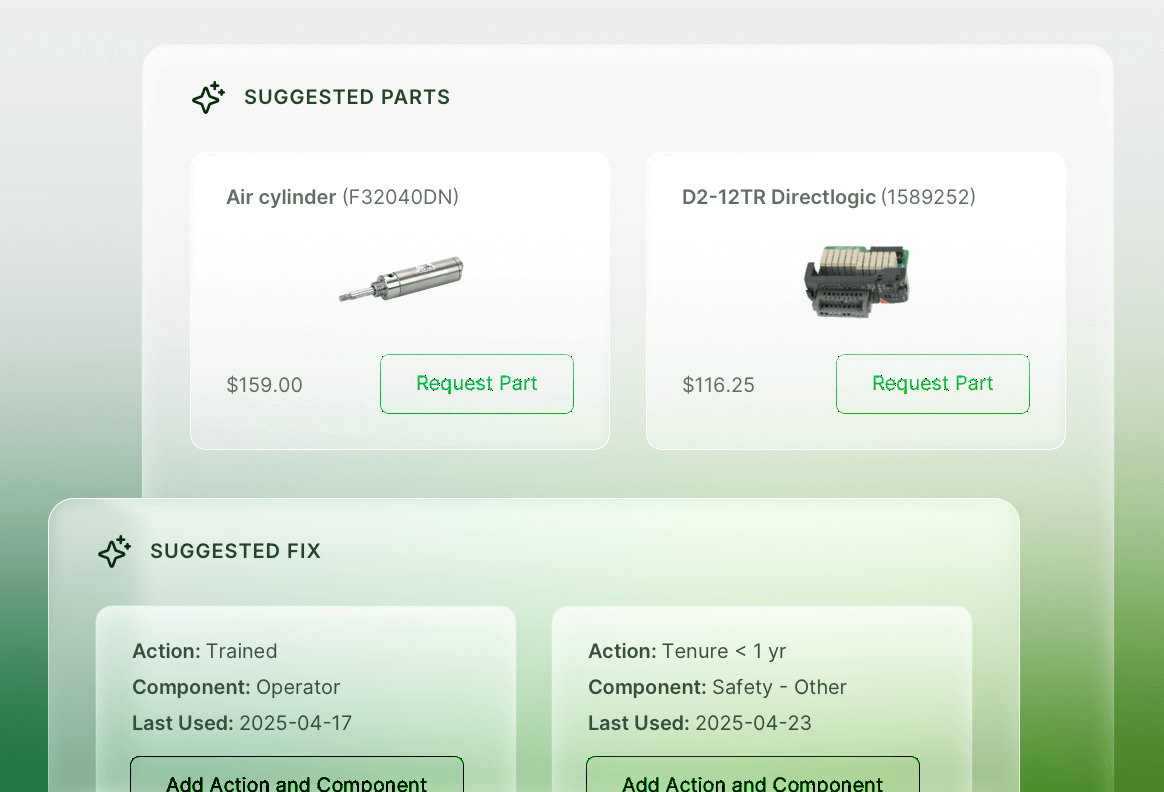
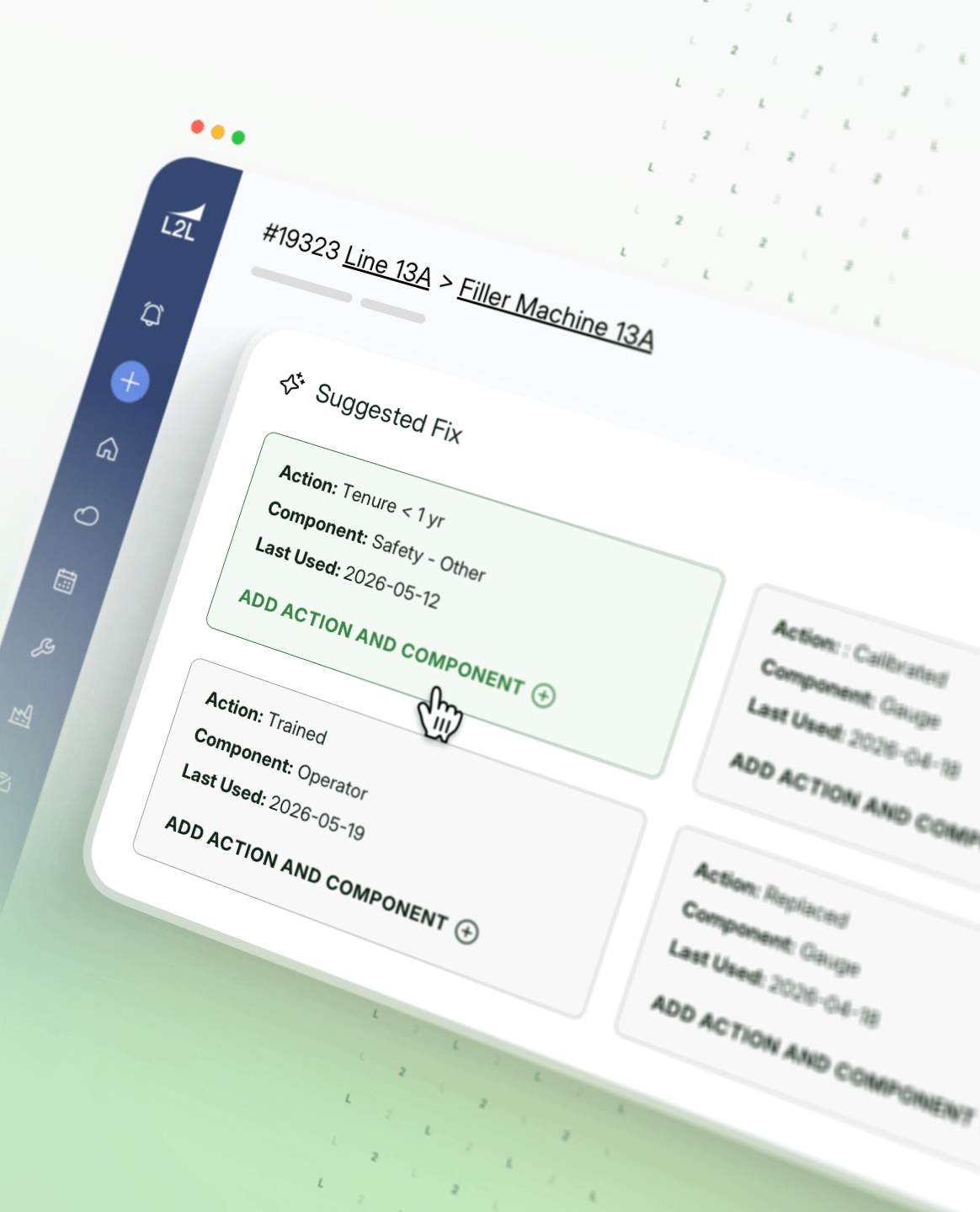
When a line slows or stops, L2L Execution AI suggests a fix and routes it to the right person.
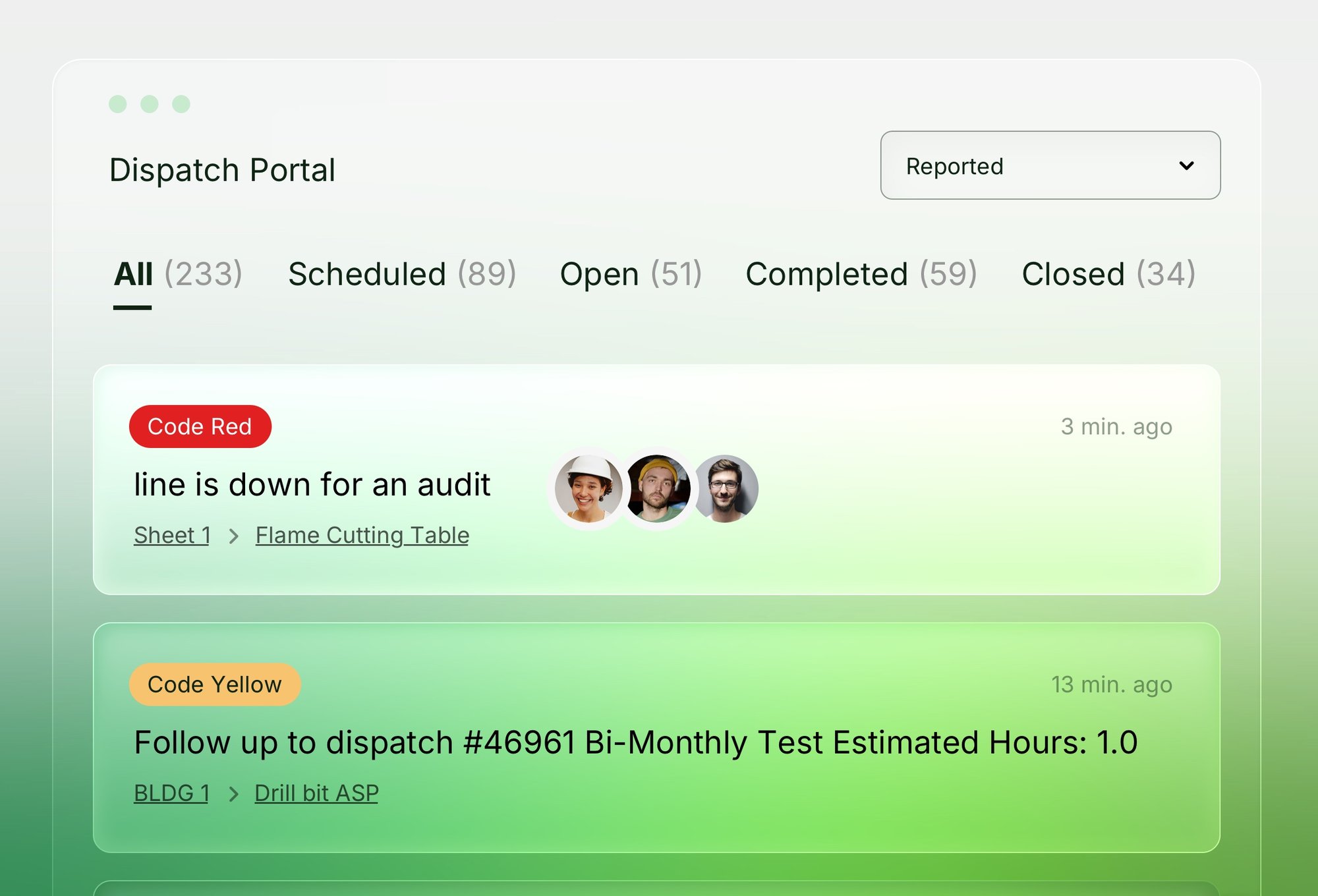
Production and maintenance data all feed the same AI layer, so a recommendation about a machine accounts for the schedule, not just sensor readings in isolation.
-
Be ahead of tomorrow's problemProactively plan, todayProactively plan, today
Real-time dashboards and predictive maintenance due dates mean you're not just seeing downtime and PM compliance as they happen. You're seeing what's likely to break before it does.
-
See what's driving breakdownsFull visibilityFull visibility
AI-powered PM Effectiveness Analysis and Machine Analysis show whether preventive maintenance is reducing failures and pinpoint what's really causing a machine's breakdown pattern.
-
A real recommendationNot just a chartNot just a chart
When a line slows or stops, L2L Execution AI suggests a fix and routes it to the right person.
-
One connected datasetMaintenance + productionMaintenance + production
Production and maintenance data all feed the same AI layer, so a recommendation about a machine accounts for the schedule, not just sensor readings in isolation.
Features to expect from a modern smart factory software
Get a recommended next action, not just a chart, with a person confirming before anything executes.
Surface failure patterns and likely root causes directly from a machine's issue history.
Project a maintenance due date from a machine's own usage history, with a confidence score.
Track downtime, response time, and compliance metrics as they change, not after the fact.
AI insights run on the same production and maintenance data, not a separate analytics layer bolted on top of siloed systems.
Kadir at Autoliv
"AI implementation for breakdown analysis is very useful for me."
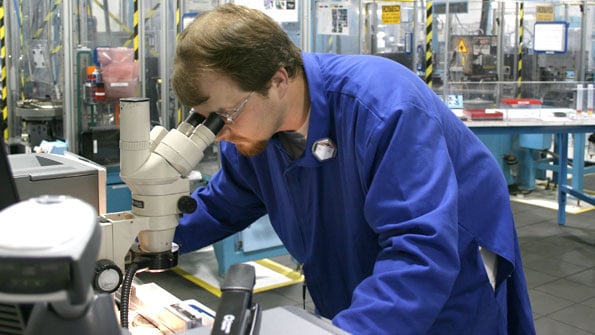
Jeremy from Worthington
“It allows us to leverage our data and make more informed decisions. It’s forced us to reevaluate how we train technicians with AI to solve problems faster and more completely.”
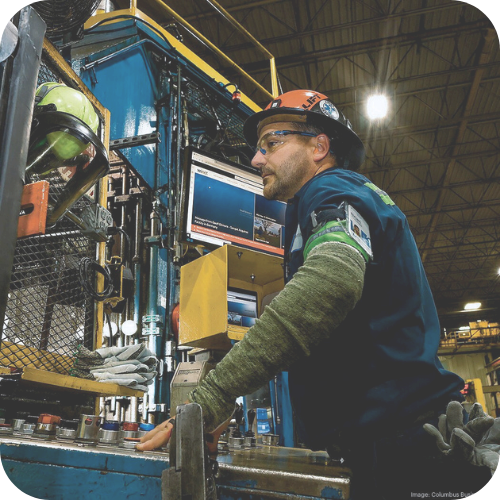
Mike from Sonoco
“It’s changed the way we make decisions. We get information more quickly, more easily, and we’re able to make faster decisions. It gives us directions to get us exactly to the right spot.”
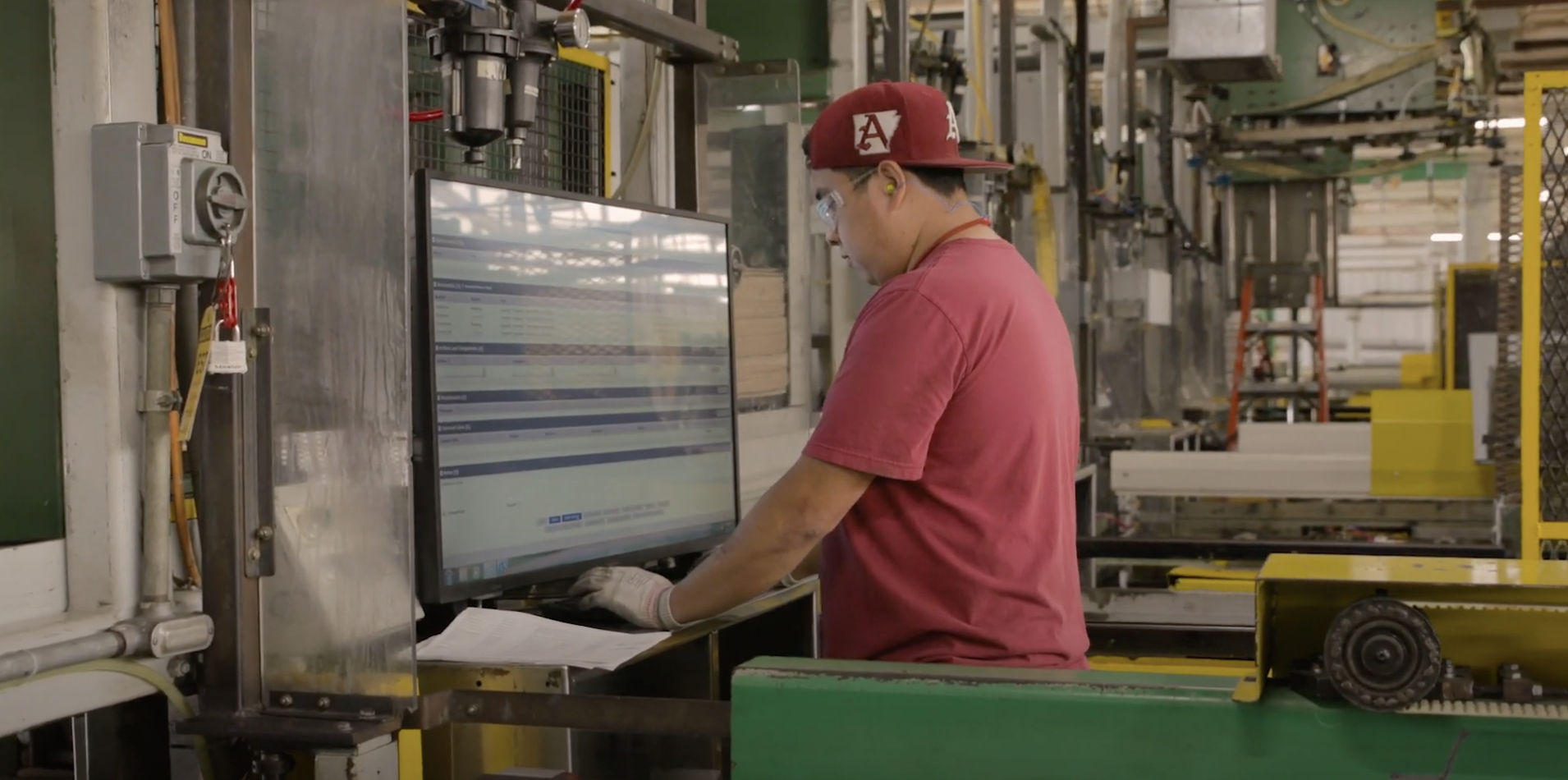
Leveling up human expertise
L2L Execution AI works alongside the people on the floor, helping veterans make faster decisions and giving new hires the context to perform like experts from day one.
What else to expect from a
smart factory software
Manufacturing Intelligence
Combination of operational reporting and AI to bridge the gap between what happened and what to do next.
Case Study: ADAC
See how ADAC moved from paper-based recording to real-time machine data, enabling smarter, cycle-based preventive maintenance decisions.
The Manufacturing Data Paradox:
Drowning in Data, Starving for Insights
Only 3 in 10 manufacturers can access shop floor data in real time, and 50% still rely on manual data collection. Learn from 600+ industrial leaders what's breaking down and what high-performing manufacturers are doing differently.
FAQ about smart factory software
What is smart factory software?
Smart factory software uses real-time data and AI to monitor equipment, production, and maintenance, and recommend next actions, rather than just displaying historical reports.
Does smart factory software require IoT sensors to work?
Not necessarily. Smart factory software can generate meaningful predictions and analysis from data already being captured through maintenance and production tracking. Sensor integration adds more input, but isn't required to start.
Does smart factory software replace our ERP?
No. Smart factory software typically complements an ERP by providing real-time execution and analytics data, not the financial and planning data an ERP is built for.
Does the AI in smart factory software act on its own?
No. Smart factory software's AI typically recommends an action, a fix, a schedule, a root cause, and a person confirms it before anything happens. It's a decision-support tool with alerts as an added automated layer.
How is smart factory software different from a regular dashboard?
A regular dashboard shows you what happened. Smart factory software analyzes that data and surfaces what's likely to happen next and what to do about it.
How is L2L different from typical smart factory software, MES, or CMMS?
Many smart factory software platforms focus purely on technology: capturing IoT sensor streams, building digital twins, and displaying live analytics on overhead monitors. While this provides visibility, data alone does not fix machines or produce finished goods. Plants frequently get trapped in pilot purgatory because their smart factory tools remain disconnected from daily execution:
- Smart factory and IIoT platforms surface advanced analytics, but fail to guide frontline teams on what actions to take when anomalies occur.
- MES platforms track orders, genealogy, and materials, but are often rigid, complex to configure, and slow to deploy.
- CMMS platforms log asset health, repair histories, and spare parts, but operate isolated from live production schedules and line performance.
- Connected worker point solutions digitize paper forms and checklists, but lack the machine telemetry and order context needed to prioritize urgent tasks.
L2L unites smart factory intelligence with MES, CMMS, and Connected Worker functionality in a single operational platform.
Instead of creating passive dashboards, L2L turns smart factory data into closed-loop frontline action:
- Data-driven dispatch: When machine sensors detect speed degradation, micro-stops, or scrap spikes, L2L automatically triggers a digital dispatch to the right technician, operator, or quality lead via mobile devices.
- Unified asset and production workflows: Real-time machine maintenance (CMMS) syncs directly with work order priorities (MES), ensuring service tasks are scheduled when they cause the least operational disruption.
- Human-centric execution: L2L pairs live telemetry with digital standard operating procedures, dynamic skill matrix verification, and root-cause problem-solving tools so frontline workers can act on plant-floor data immediately.
By connecting machines, systems, and people in real time, L2L delivers the practical benefits of a smart factory without the custom integration headaches or multi-year rollouts of legacy architectures.
Ready to know what to do next?
L2L eliminates downtime and increases productivity. Our platform delivers real-time guidance to frontline teams, unified control for operations leaders, and measurable insights for global executives.