
Equipment maintenance software
that goes further
L2L manages your equipment maintenance process end-to-end, from operator-based maintenance on the shop floor to predictive maintenance with AI, and everything in between.
A machine is at its best the day it's bolted to the floor
From that day forward, every maintenance activity, an operator catching an abnormality, a technician completing a PM, an AI model predicting a failure before it happens, is what keeps that equipment performing like new instead of degrading.
That's the full arc of equipment management, not a single feature, and it's where L2L is built to operate at every stage, not just one.
Our approach to equipment maintenance
Simplify maintenance and connect activities with other departments.
-
Catch abnormalitiesBefore breakdownsBefore breakdowns
-
Operator actionAs the first line of defenseAs the first line of defense
-
Preventive maintenanceThat runs on scheduleThat runs on schedule
-
Predictive maintenancePowered by AIPowered by AI
-
Equipment healthIn a real-time dashboardIn a real-time dashboard
Catch abnormalities before they become breakdowns
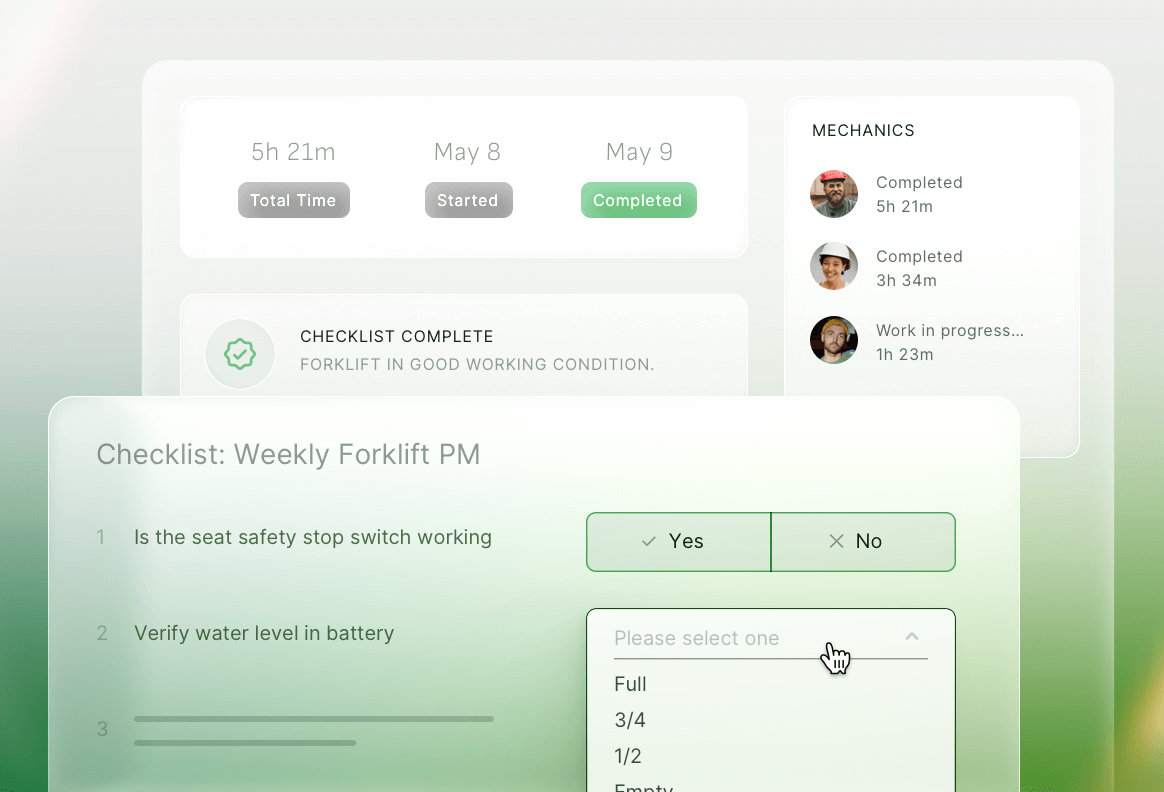
Operators run scheduled cleaning-and-inspection checklists and file a dispatch the moment they spot an abnormality, so small issues get fixed before they turn into unplanned downtime. This is the first pillar of the process, not the whole of it.
Operators as the first line of defense
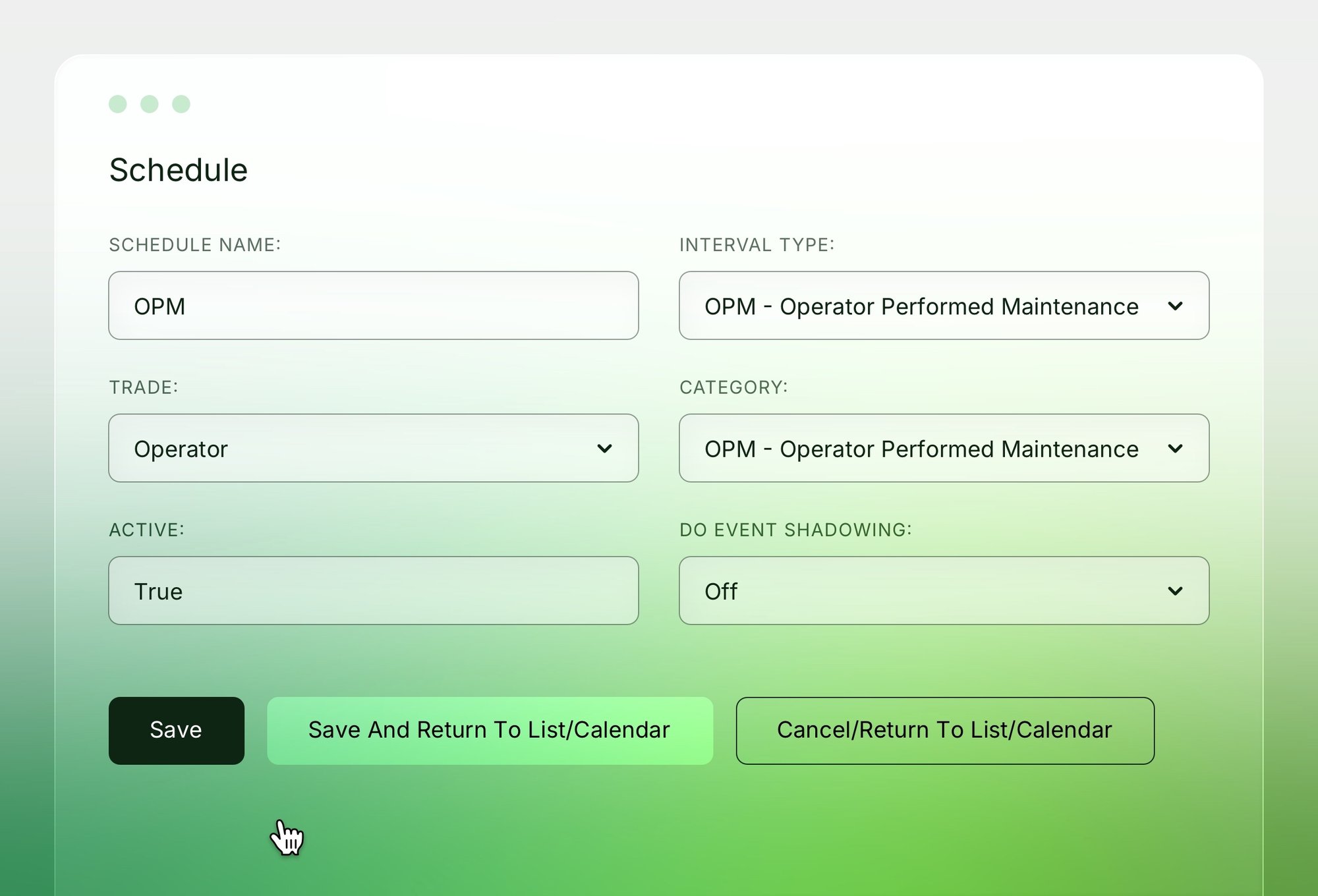
Operator Performed Maintenance lets operators handle routine cleaning, inspection, and abnormality detection, freeing maintenance technicians to focus on the complex repairs and planned work that follow.
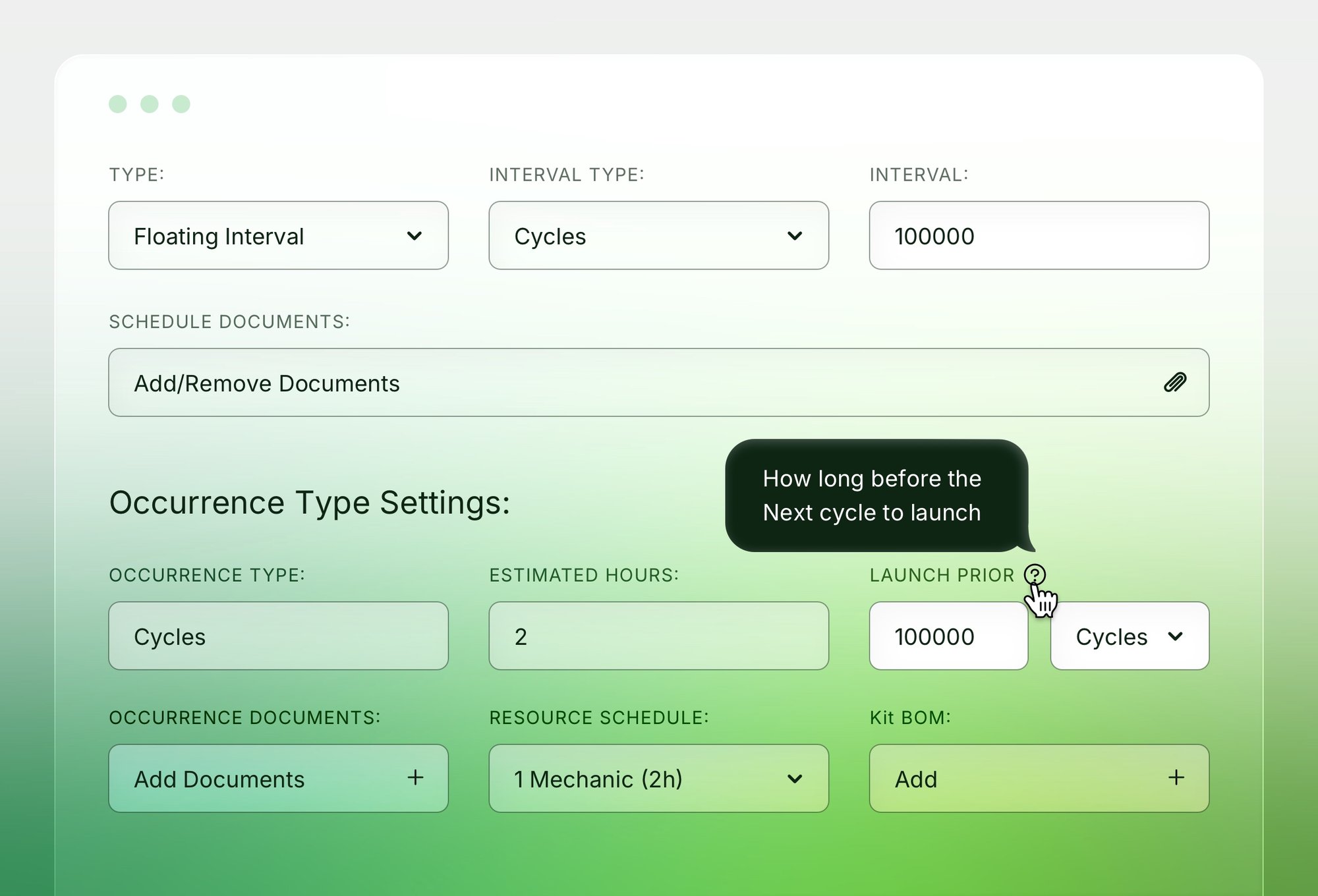
Preventive maintenance that runs on schedule
PMs are triggered by time, cycle, or condition, so scheduled work happens before something breaks, not after.
Predictive maintenance, powered by AI
For cycle-based PMs, L2L learns a machine's actual cycle rate from its history and projects
a due date with a confidence score before it becomes overdue.
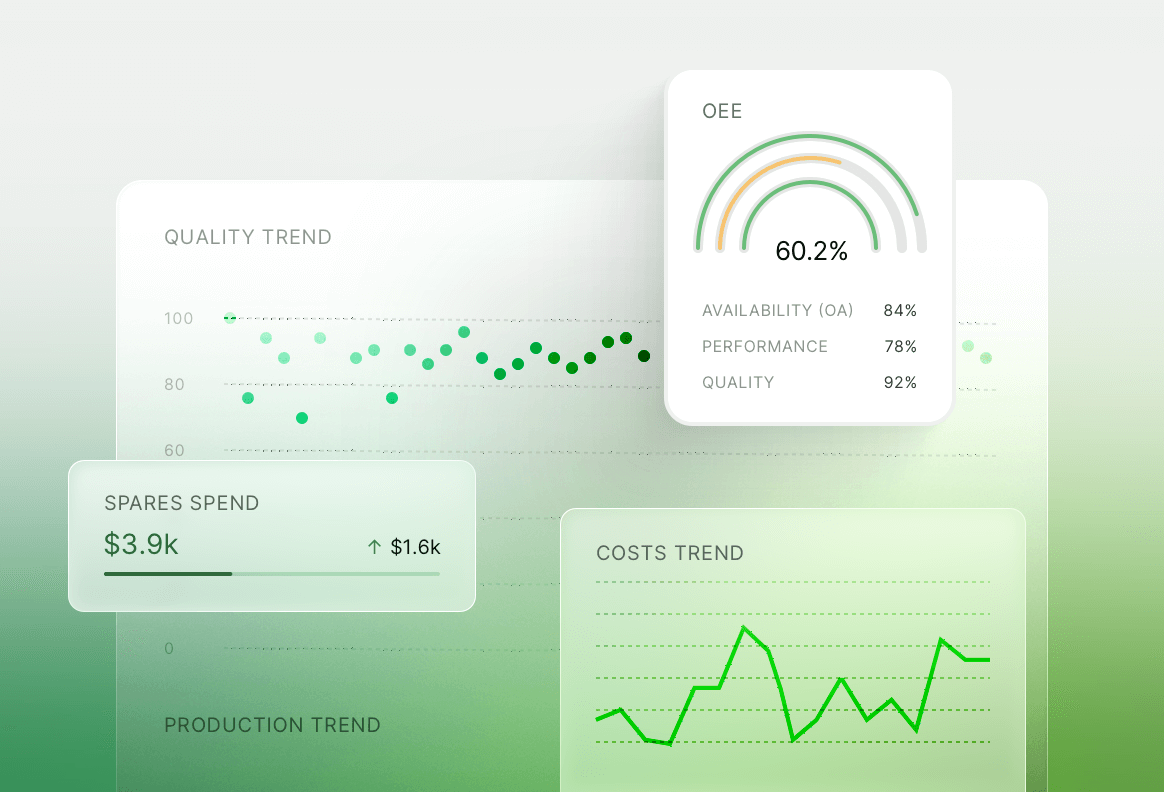
Real-time equipment health, in one dashboard
Track on-time PM percentage, machine downtime, average response time, and spares spend on a live dashboard, refreshed every 10 minutes, so you're never working from a stale report.
-
Catch abnormalitiesBefore breakdownsBefore breakdowns
Catch abnormalities before they become breakdowns
Operators run scheduled cleaning-and-inspection checklists and file a dispatch the moment they spot an abnormality, so small issues get fixed before they turn into unplanned downtime. This is the first pillar of the process, not the whole of it.
-
Operator actionAs the first line of defenseAs the first line of defense
Operators as the first line of defense
Operator Performed Maintenance lets operators handle routine cleaning, inspection, and abnormality detection, freeing maintenance technicians to focus on the complex repairs and planned work that follow.
-
Preventive maintenanceThat runs on scheduleThat runs on schedule
Preventive maintenance that runs on schedule
PMs are triggered by time, cycle, or condition, so scheduled work happens before something breaks, not after.
-
Predictive maintenancePowered by AIPowered by AI
Predictive maintenance, powered by AI
For cycle-based PMs, L2L learns a machine's actual cycle rate from its history and projects
a due date with a confidence score before it becomes overdue. -
Equipment healthIn a real-time dashboardIn a real-time dashboard
Real-time equipment health, in one dashboard
Track on-time PM percentage, machine downtime, average response time, and spares spend on a live dashboard, refreshed every 10 minutes, so you're never working from a stale report.
Features for better
equipment maintenance
Equipment maintenance software that helps you visualize what happened - and what's coming next, all connected to the flow of work.
Pause a schedule for planned downtime, like a holiday shutdown, and resume it when you're back, picking up right where it left off and advancing to the next launch cycle automatically.
Review machine breakdown history against completed PMs to see which checklist steps are actually preventing failures, and cut the ones that aren't.
For cycle-based PMs, we calculate the machine's actual cycle rate from its PM history and project a due date with a confidence score, before it becomes overdue.
L2L manages equipment health across its full lifecycle, operator-based checks, preventive scheduling, and AI-driven prediction, not just one stage of it.
Once an issue is caught, route it to the right technician automatically. Assigning who does the work is handled by Resource Scheduling, in the same connected system.
Digital checklists tied to dispatches build a completion record automatically as operators inspect and catch abnormalities, no separate paperwork.
Review breakdown history against completed improvement actions to see what actually reduced failures, connected to the same Lean tools used across the plant.
Chad from West Liberty Foods
"L2L has not only saved us money, but it has also improved our processes and made us more productive with the resources we have."
Steve Thompson
"The maintenance teams really like L2L. We feel like we're getting value for our investment."
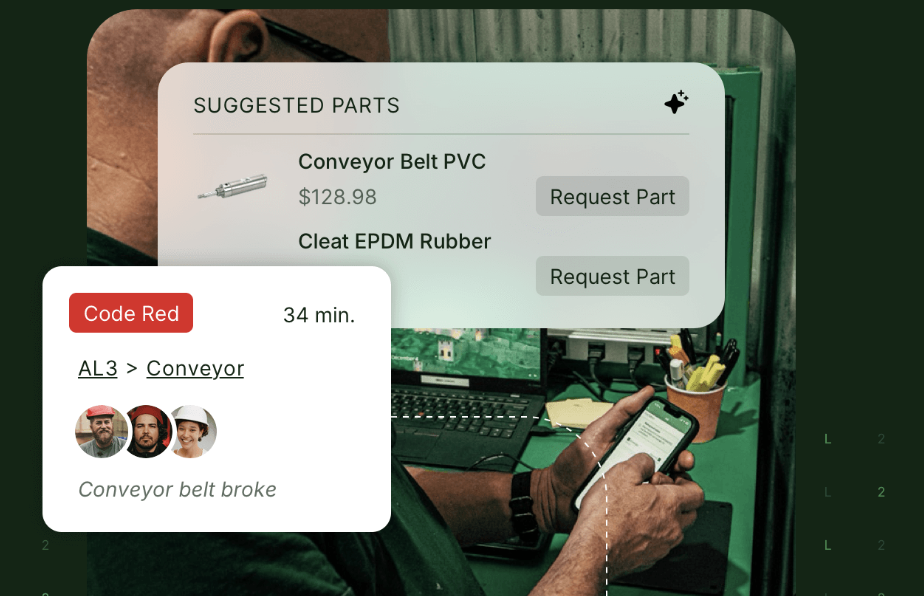
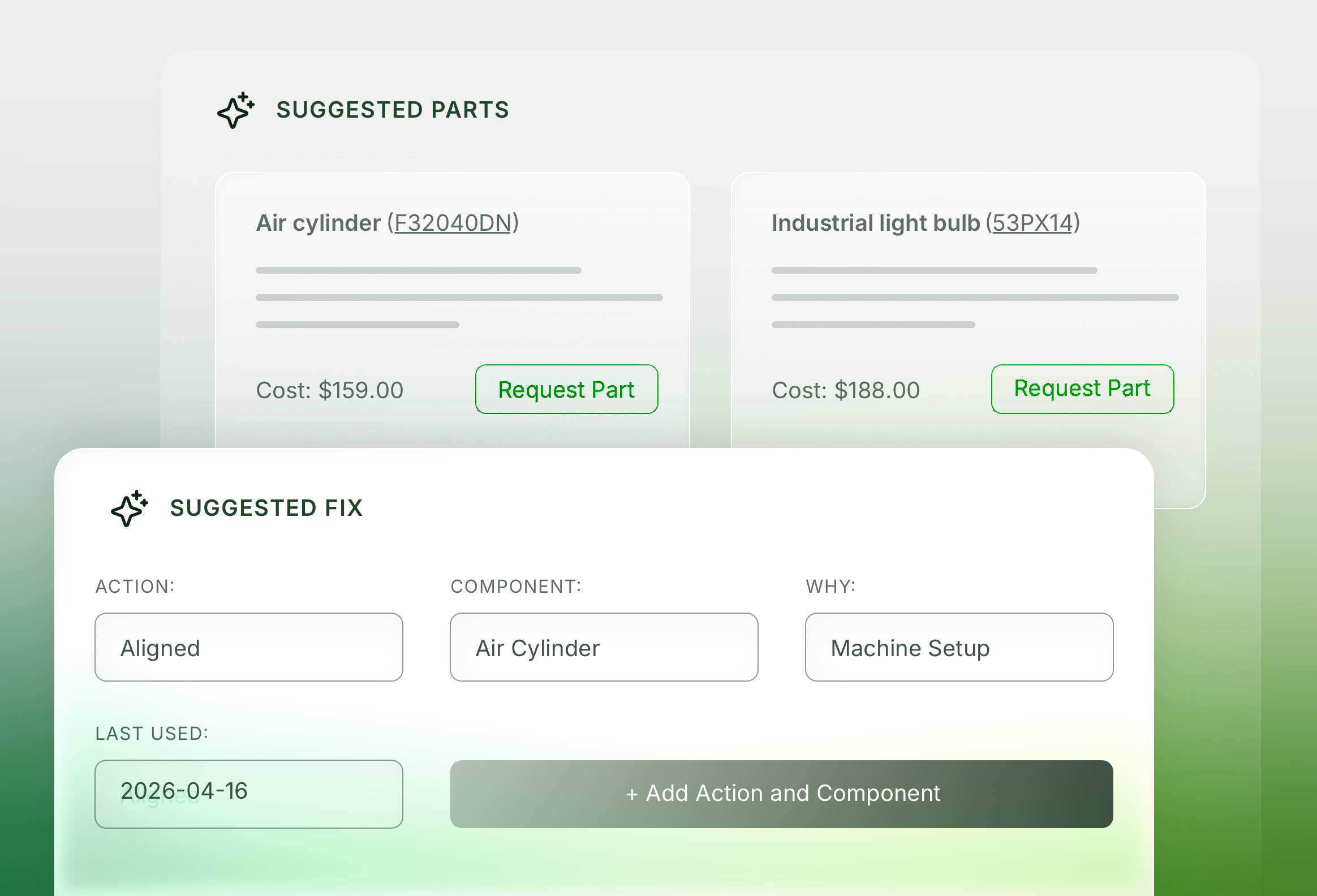
Get suggested fixes
before things break down
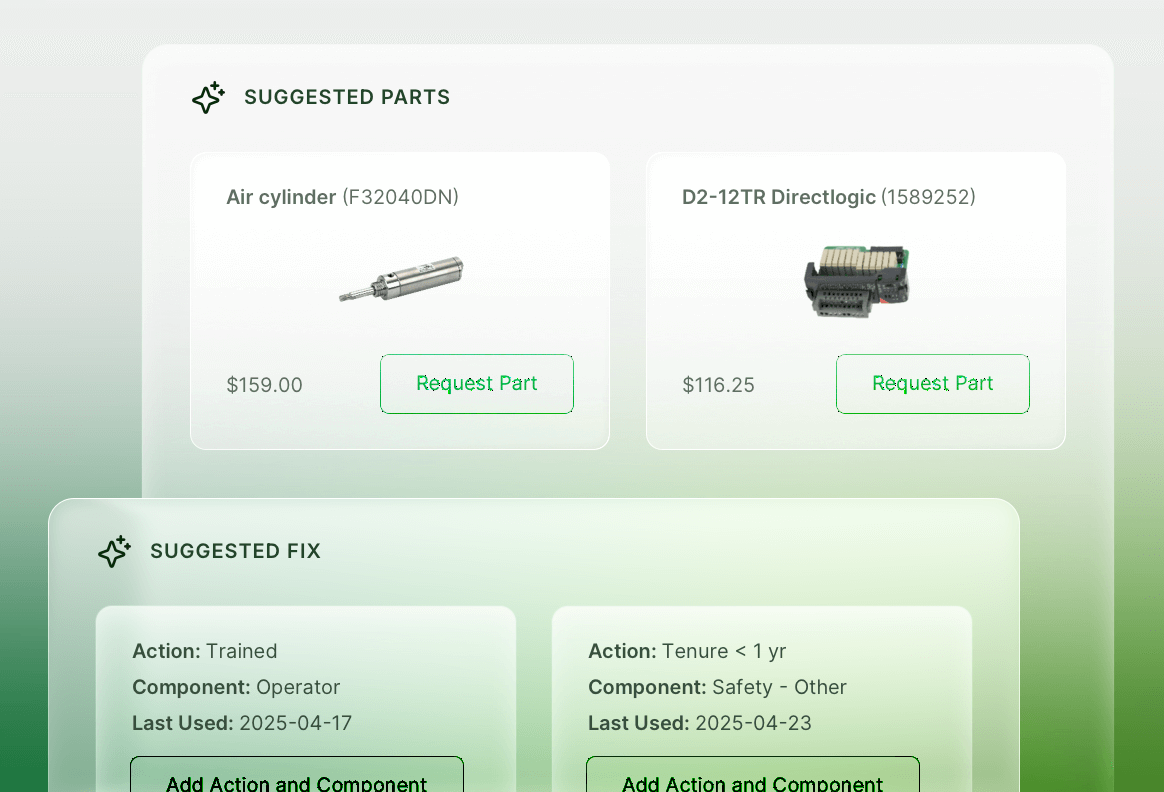
L2L Execution AI gives you the suggested fix to a problem, based on what solved the issue last time.
Equipment maintenance and more
Maintenance Management
Coordinate work orders, PMs, and spare parts in one system built for maintenance teams.
AI in Maintenance
Learn more about AI’s role in maintenance and how you can incorporate it into your maintenance strategy.
CASE STUDY:
Mueller's proactive maintenance
See how Mueller improved their equipment maintenance with better communication and visibility.
The Smart Manufacturer's Guide to Buying a CMMS
Choosing a CMMS means choosing how your team catches problems before they become breakdowns. This guide breaks down what to look for, and how to connect equipment maintenance to the rest of your operations.
FAQ about equipment maintenance
Find out how L2L improves equipment maintenance, enhances visibility across plants, and ties directly to your existing workflows.
What is equipment maintenance software?
Equipment maintenance software manages the full lifecycle of your equipment, from operator-based checks on the shop floor to scheduled preventive maintenance to AI-driven predictive maintenance, in one connected system.
Does equipment maintenance software only catch abnormalities?
No. Catching abnormalities through operator inspection is the first pillar, but equipment maintenance software should also cover preventive maintenance, predictive maintenance, and the technician-side repair process—the full asset management arc, not one piece of it.
How does equipment maintenance software help prevent breakdowns?
It combines operator-run inspection checklists that catch small issues early with preventive schedules and AI-driven predictions that flag likely failures before they happen.
Can equipment maintenance software involve operators as well as maintenance technicians?
Yes. Operator Performed Maintenance lets operators handle routine cleaning, inspection, and abnormality detection as the first line of defense, with technicians handling the complex repairs and planned work.
How does equipment maintenance software track maintenance performance?
It can track metrics like on-time PM percentage, machine downtime, average response time, and spares spend on a live dashboard, refreshed continuously.
Does equipment maintenance software handle scheduling technicians too?
Equipment maintenance software focuses on equipment health across its full lifecycle, catching issues, running preventive schedules, and predicting failures with AI. In the L2L platform, scheduling and assigning the technicians who do that work runs in the same connected system, not a separate tool.
How should you choose equipment maintenance software?
A few things actually differentiate one system from another, beyond the basic checklist of "does it track work orders":
- Does it cover the full lifecycle, or just one piece? Some systems only log reactive repairs. Look for one that spans operator-based checks, preventive scheduling, and predictive maintenance, not just one stage.
- Does it connect to production data, or sit in isolation? A tool that only sees maintenance activity can't tell you whether a fix actually improved output.
- Can it predict, or only schedule? Fixed-calendar PM scheduling is table stakes. Predictive due dates based on a machine's actual cycle history are a real differentiator.
- How does it handle spare parts? Check whether spares tie directly to work orders and specific assets, not just a general inventory count.
- Can it scale across sites without losing consistency? Check for cross-site visibility and standardized reporting, not a single-site deployment repeated manually.
- How long does implementation actually take? Weeks versus months is a real difference in time-to-value. Ask for a concrete number.
The honest filter: don't evaluate a system on whether it can track a work order, almost everything can. Evaluate it on whether it covers the whole equipment lifecycle, or just one piece of it.
Why use equipment maintenance software?
Because the alternative—paper logs, spreadsheets, or a system that only handles one stage of the maintenance process—has a predictable failure mode: issues get caught late, PMs slip unnoticed, and nobody can say whether a repair fixed the underlying problem or just patched the symptom. Equipment maintenance software should span the full lifecycle, including operator detection, preventive scheduling, predictive AI, closing that gap end-to-end.
Ready to eliminate downtime?
Discover how L2L delivers real-time guidance to frontline teams, unified control for operations leaders, and measurable insights for global executives.
Manufacturing Intelligence