



.svg)
 Shop floor execution
 Maintenance
 Production
 Skills
.png?width=60&height=60&name=chart-line-up%20(1).png) Manufacturing Intelligence
Manufacturing Intelligence
 Automotive
 Building materials
 Packaging
 CMMS/EAM
 MES
MES
 Connected Worker
 Manufacturing Intelligence
 Case studies
 Blog
Blog
 Ebooks & Guides
 Webinars
 Events
.svg) OEE Calculator
OEE Calculator
 Downtime Cost Calculator
 About Us
 Partners
 Newsroom
 Support
 Careers
 Trust center


.svg)

 Gloria
Gloria
Gloria

General Standard Operating Procedure (SOP) Best Practices.
Standard operating procedures (SOP) provide guidelines for your frontline team members to complete a given process. SOPs are often used to ensure that operations run smoothly: with cohesion, performance uniformity, and in compliance with safety measures and regulations.
Before you get started with the actual development of your standard operating procedures, consider the following SOP best practices:
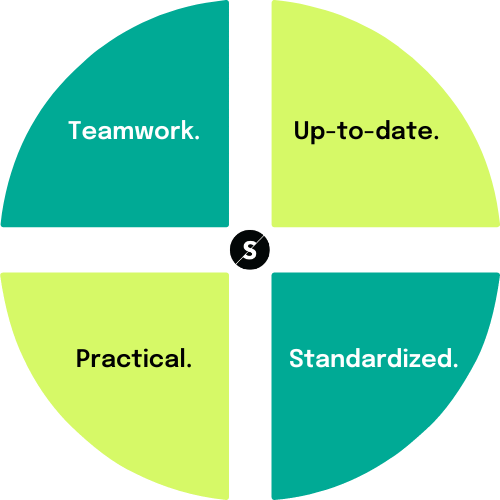
SOP best practices: standardized and practical information that is up-to-date. Bonus points for team buy-in, where continuous improvement can be achieved with input from multiple team members.
Get your team on board.
One of the biggest challenges in SOPs is the lack of team adoption. SOPs can often be perceived as restrictive. That’s why it’s very important that you involve your team in the creation process of your SOPs.
Talk to your key stakeholders to gather their input and ideas and understand their perspectives. Make sure you share a draft of the SOP with them early on for essential feedback. Not only will this improve adoption, but it will boost morale and lay the groundwork for more frontline engagement.
Aim for practicality.
Standard operating procedures need to be designed with practicality in mind: your team must be able to put them into practice. That’s why it’s important to talk to your team and understand if the SOP reflects their actual workflow and perspectives.
Review and maintain.
Another common mistake is not reviewing and properly maintaining SOPs. Procedures can change from time to time, and you might also identify ways to improve them. When this happens, make sure you update your SOP.
Mind the S in SOP.
Standard operating procedures should be standardized. There is no room for deviations ambiguity in the content, and it's essential that the same SOPs are distributed to every line, team, or site that needs to use them.
Best Practices: Writing SOPs.
1. Keep things simple
- Break down each procedure into individual instructions.
- Break down individual instructions into individual steps.
- Limit each step to a single action. Use one verb per sentence.
2. Avoid jargon and stick to your terms
- In SOPs, jargon should be kept to a minimum. Use plain, literal language.
- Stick to a term once you use it. For example, if you refer to “sterilized bottles” in the first step, use “sterilized bottles” (and not just “bottles”) in follow-up steps.
3. Use active voice and action-oriented language
- Start sentences with a verb whenever possible.
- Always use active voice instead of passive voice.
- Active voice: Use the lever to lift the object.
- Passive voice: The object should be lifted with the lever.
4. Keep a good flow in instructions and don’t leave critical info for later
- Don’t add unnecessary actions where they are not needed, and don’t forget any actions required to complete a task.
- If you need to provide a warning or troubleshooting info, do it when you’re explaining the relevant step, and not before or after.

Simplicity and action-oriented practicality: best practices when making great SOPs.
Best Practices: SOP Visuals.
Visuals are extremely important in SOPs. Follow these tips:
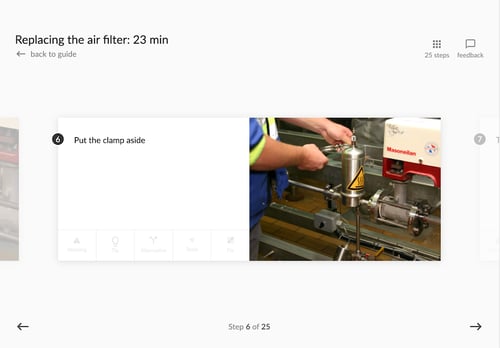
- Make your visuals as clear as possible: show the action clearly.
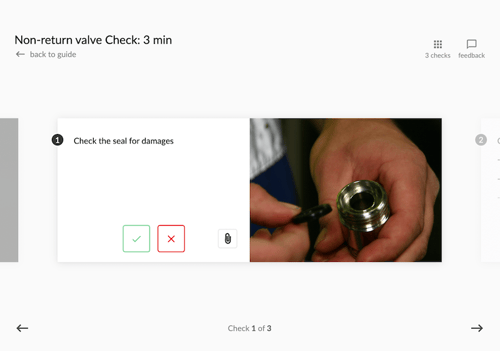
- Use simple, animated GIFs or short videos when you want to show someone how to do something. Static pictures work best for simple actions like “press a button.”
-
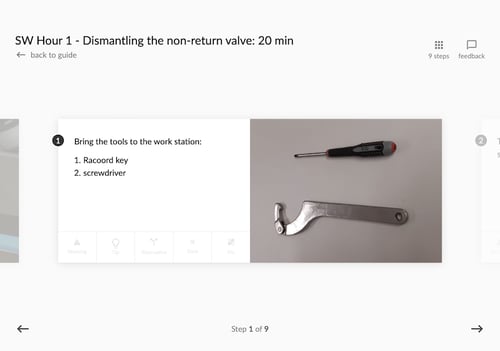
Show context and detail where it’s needed. For example, if you need to show how to attach a lock to something, show the lock close up. Or if you want to highlight the tools needed, make sure to clearly show them in the visuals.
That’s it! Now on to standardizing your own procedures.
Check out our other articles on SOPs:
👉 Standard Operating Procedures: 5 Reasons Why You Need Them
👉 What is a Standard Operating Procedure?
👉 SOP Template for Smarter (and Easier) Work.%20Best%20Practices%20%26%20Guidelines.png?width=774&height=240&name=Standard%20Operating%20Procedures%20(SOP)%20Best%20Practices%20%26%20Guidelines.png)