The skills matrix software made for manufacturing
Coordinate your frontline team's capabilities in skills matrix software that self-updates, tracks revision history, and enforces requirements at the point of work. No more hours wasted updating skills manually in Excel.
Skills matrix that's purpose-built for frontline teams
-
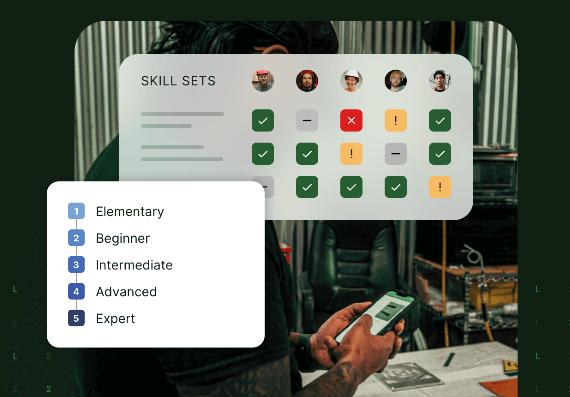
A self-updating skills matrixDynamic overview of capabilitiesDynamic overview of capabilities
-
Requirements down to the specific line and machineGranular break downGranular break down
-
Training status that's always currentNever outdatedNever outdated
-
Re-training that triggers itselfIt's timeIt's time
-
Find coverage in secondsWho can do itWho can do it
Set expiration dates and assessment deadlines on any skill, so re-training triggers automatically on a schedule and not just when someone happens to notice it's “time.”
Capability search finds certified colleagues by skill or qualification so that shifts can be planned or rotated on short notice.
-
A self-updating skills matrixDynamic overview of capabilitiesDynamic overview of capabilities
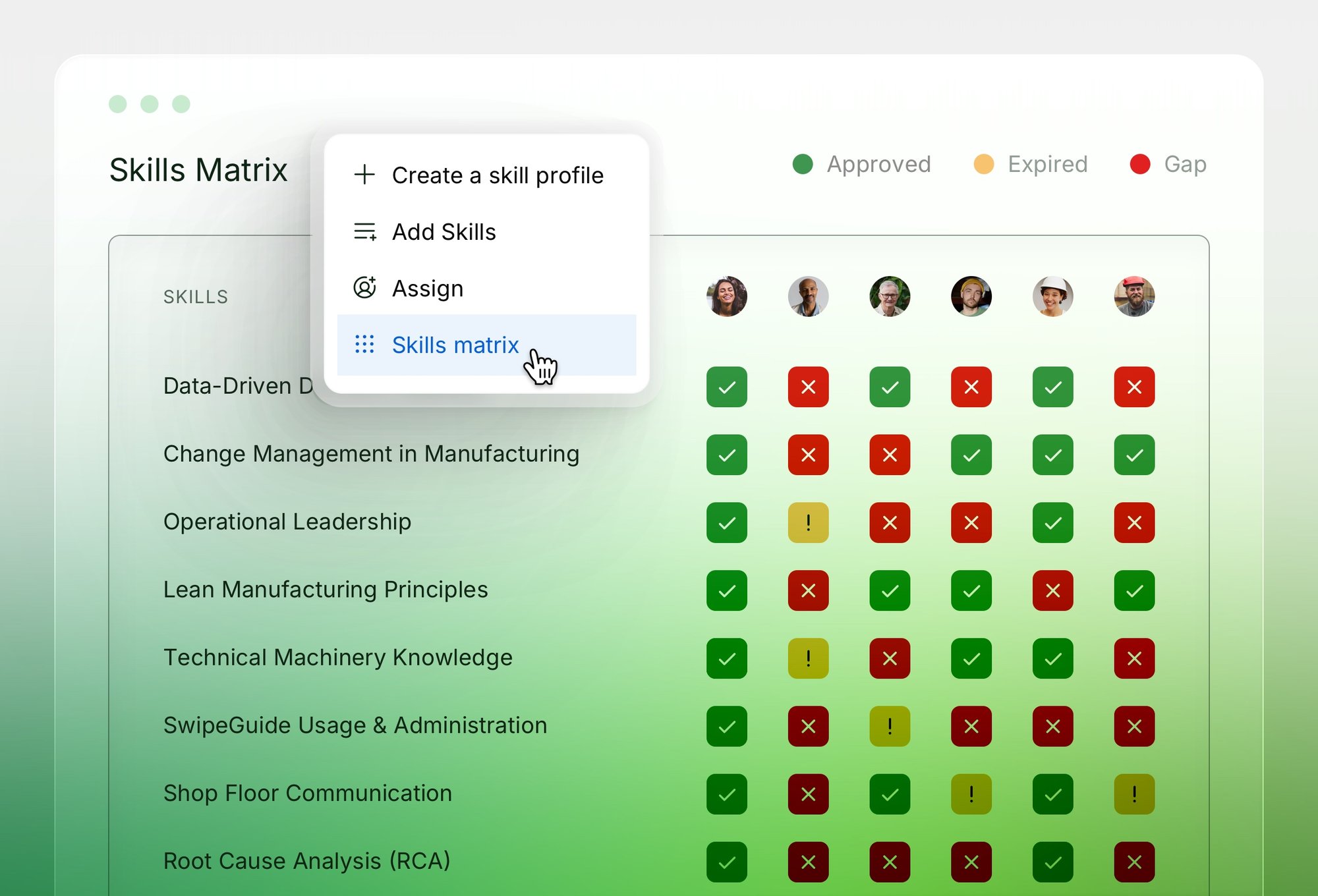
Dynamic overview of skill status, comparing past and current levels, updated automatically as assessments happen. -
Requirements down to the specific line and machineGranular break downGranular break down
Requirements break out by line, role, and specific machine, not a generic role-based checklist. -
Training status that's always currentNever outdatedNever outdated
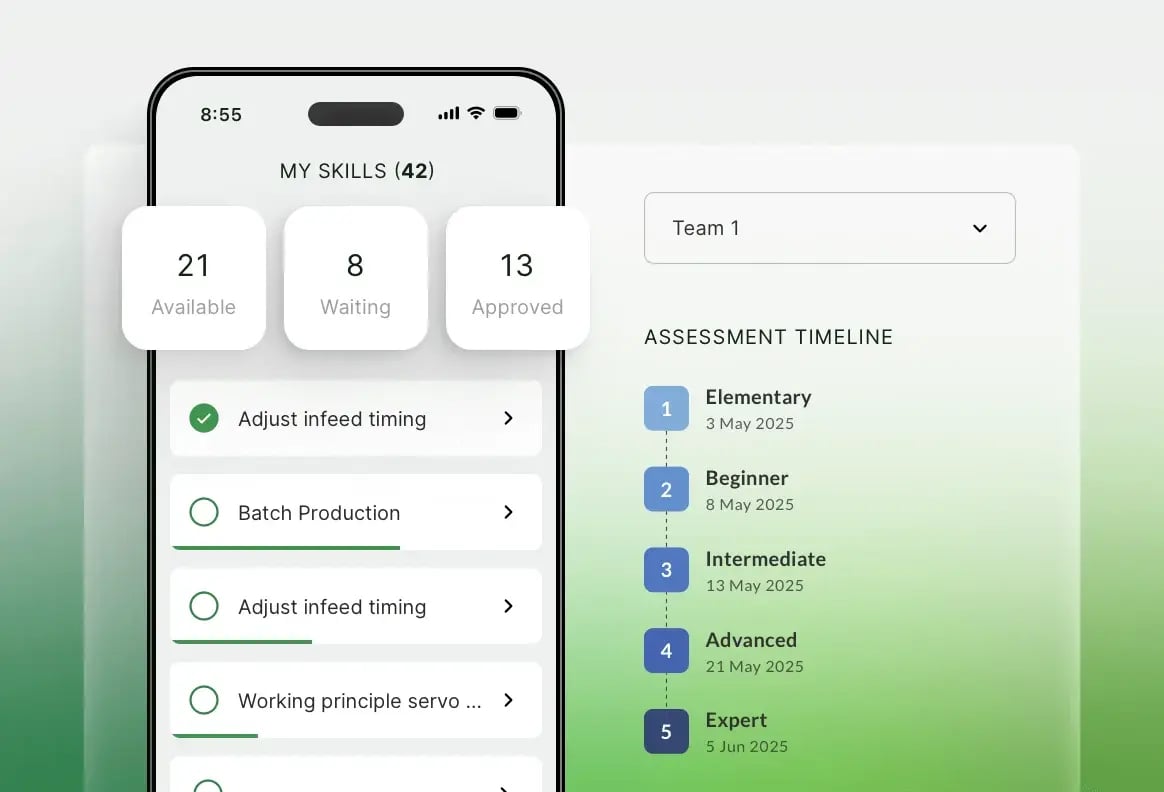
See training progress and completion status across your team, updated as it happens, not compiled into a report after the fact. -
Re-training that triggers itselfIt's timeIt's time
Set expiration dates and assessment deadlines on any skill, so re-training triggers automatically on a schedule and not just when someone happens to notice it's “time.”
-
Find coverage in secondsWho can do itWho can do it
Capability search finds certified colleagues by skill or qualification so that shifts can be planned or rotated on short notice.
Dynamic overview of the skills development status of your team, comparing past and current levels per skill, updated automatically as assessments happen.
Set skill requirements down to the specific line, role, and machine, not just a generic role-based checklist.
Track who's been trained on the current revision of a skill versus who's still on an outdated one, whenever a procedure changes.
Set expiration dates and assessment deadlines on any skill, so retraining triggers automatically on a schedule, not tied to machine activity that isn't currently tracked.
Create skill levels and competency frameworks based on how your organization works.
Find certified colleagues by skill or qualification to cover a shift or rotate team members on short notice.
Drill into a person's certificates, validation records, and skill history from the matrix itself.
Valerie at ADTI
"Spending 4 hours every day manually updating our skills matrix in Excel was a total headache."
Godwin from HEINEKEN
"A system that operators can easily fall back on to see where they can develop themselves. They see skills gaps and the means available to close these gaps."

Onno from HEINEKEN
"From an organizational point, L2L gives us the flexibility to add skills, and we know it's always a certified person who validates skill levels. On a personal level, being able to have control of your own skill development is motivational."

Boost your impact with L2L Execution AI
The matrix shows you where the gaps are. L2L Execution AI helps you close them.
It turns your existing SOPs and documents into step-by-step checklists and guides, and it can draft a new instruction from a video of the task.
L2L Skills
Smooth operations during every shift, no matter who is working with a solid skills management software.
The Skills Gap Is Right in Front of You
When people talk about the skills gap, they talk in numbers. 3.8 million open manufacturing jobs by 2033. More than half of open roles unfilled...
CASE STUDY: HEINEKEN Reduced Training Time
Get inspired by how HEINEKEN set up a global system for capability management across 140+ breweries.
Are frontlines equipped for success?
67% of manufacturing professionals say they’ve observed a growing skills gap. What are companies doing (and not doing) to future-proof their workforce?
Download our Manufacturing Skills Report to hear from 600+ frontline leaders.
Frequently asked questions about skills matrix software
What is a skills matrix?
A skills matrix is a table that maps employees against the skills or certifications required for their job, showing who's qualified for what across a team or site.
How is a digital skills matrix different from an Excel skills matrix?
A digital skills matrix adjusts automatically as certifications and assessments happen, tracks skill revision history, and lets you set expiration dates and deadlines so retraining triggers on a schedule, unlike an Excel skills matrix, which requires manual updates and quickly goes out of date.
What is a skills matrix used for in manufacturing?
In manufacturing, a skills matrix tracks which operators and technicians are certified to run specific lines, machines, or processes, so shift supervisors can staff a line correctly and avoid putting an unqualified person on equipment.
How does a skills matrix work for frontline teams?
A skills matrix for frontline teams gives management a comprehensive view of who's qualified and who's still in training, broken out by line, role, and machine, so staffing decisions are based on real status instead of a role on paper.
Why do manufacturers need a skills matrix instead of relying on a training log?
A training log records that training happened in the past. A skills matrix for manufacturing ties that record to real-time production, so a supervisor can see who's certified for today's shift, not just who completed a course at some point.
Can a skills matrix help with shift planning on the frontline?
Yes, a skills matrix lets frontline supervisors plan shifts based on who's actually certified and see risks like skills gaps or upcoming retirements ahead of time.
How often does a digital skills matrix update?
A digital skills matrix updates in real time, as certifications, assessments, and check-ins happen, rather than on a manual review cycle.
What is skills matrix software?
Skills matrix software tracks which employees are qualified for which tasks, machines, or roles, replacing a static spreadsheet with a system that updates automatically as certifications and assessments happen. Instead of a manager manually maintaining a grid of names against skills, the matrix reflects real-time status: who's current, who's expiring, and who has gaps, pulled directly from training records rather than re-entered by hand.
What are the benefits of skills matrix software?
- No more manual upkeep. The matrix updates itself as certifications and assessments happen, instead of someone spending hours re-entering data in Excel.
- Compliance gaps become visible before they're a problem. A proactive view of skills expiring soon, incomplete training, and overdue retraining means issues surface with enough lead time to actually act on them.
- Faster shift coverage decisions. Capability search lets a supervisor find who's actually certified for a task in seconds, useful when someone calls out and a shift needs to be covered fast.
The common thread across all of these: a skills matrix only creates value if it reflects reality in real time. A matrix that's accurate once a quarter is barely better than no matrix at all. The benefit isn't having the data, but trusting it enough to act on it immediately.
Coordinate your team's capabilities, automatically
Discover how L2L connects your teams with real-time data and tools to reduce downtime through optimized manufacturing operations.