


.svg)
 Shop floor execution
 Maintenance
 Production
 Skills
.png?width=60&height=60&name=chart-line-up%20(1).png) Manufacturing Intelligence
Manufacturing Intelligence
 Automotive
 Building materials
 Packaging
 CMMS/EAM
 MES
MES
 Connected Worker
 Manufacturing Intelligence
 Case studies
 Blog
Blog
 Ebooks & Guides
 Webinars
 Events
.svg) OEE Calculator
OEE Calculator
 Downtime Cost Calculator
 About Us
 Partners
 Newsroom
 Support
 Careers
 Trust center


.svg)

The need for better employee training is at an all-time high.
Our frontline needs effective employee training now more than ever.
Frontline teams are integral to:
- Monitoring and managing complex machinery and processes
- Identifying and addressing issues
- Ensuring overall safety and efficiency
Despite advances in automation and technology the bulk of frontline tasks still require human presence and intervention. But in order to do these jobs effectively, they need the right employee training throughout their career.
We’ll take a look at the changing face of frontline employee training and some techniques that you can apply today.
"Success in manufacturing starts with the workers on the shop floor. They rely on having the right knowledge, day in and day out."
- MPE Europe at PepsiCo, on the importance of supporting the frontline with knowledge.
What's new in 2024?
- Massive developments in AI. Greater accessibility and customization to individual needs.
- Better digital job aids. Simple, powerful tools available at the moment of need for on-the-job training.
- Skills-focused training. Companies across the board are shifting to a skills-based structure in general, and frontline training reflects this.
- More collaboration. Digital transformation makes it easier to open up a feedback loop for continuous improvement.
Understanding the Modern Frontline.
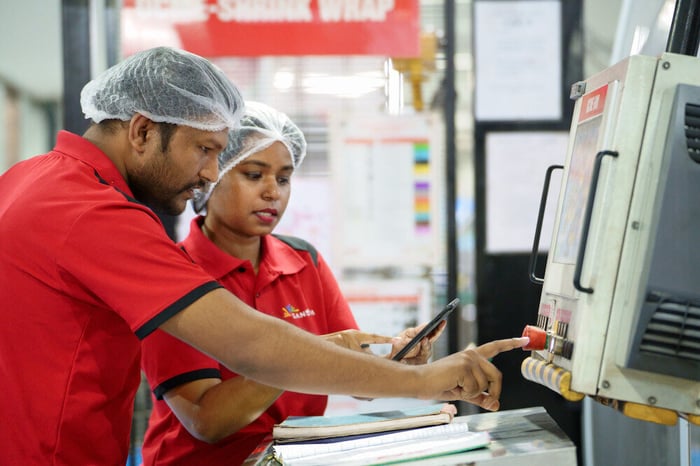
In order to effectively train frontline workers, it is crucial to understand their needs in the modern industrial and manufacturing landscape. Today's frontline workers require a combination of technical skills, problem-solving abilities, adaptability, and effective communication.
They need to be equipped with the knowledge and skills to operate and maintain advanced machinery and technology. Additionally, they need to be trained in safety protocols and compliance regulations to ensure a secure and risk-free working environment.
A lack of career perspective is one of the top reasons people leave their manufacturing job.
- 44% of frontline workers in manufacturing are not satisfied with their career prospects.
- 53% of frontline workers are considering leaving their manufacturing jobs in the next 2 years.
- By 2030, over 1 billion people require reskilling.
👉 This is a group of people who need to learn and master an incredible amount of complex information.
Tailoring employee training methods to meet the frontline's needs.
To deliver training that resonates with the needs of frontline workers, it's important to tailor the methods and approaches used. Traditional training methods are simply not as effective at engaging and retaining the attention of modern workers.
On-the-job training.
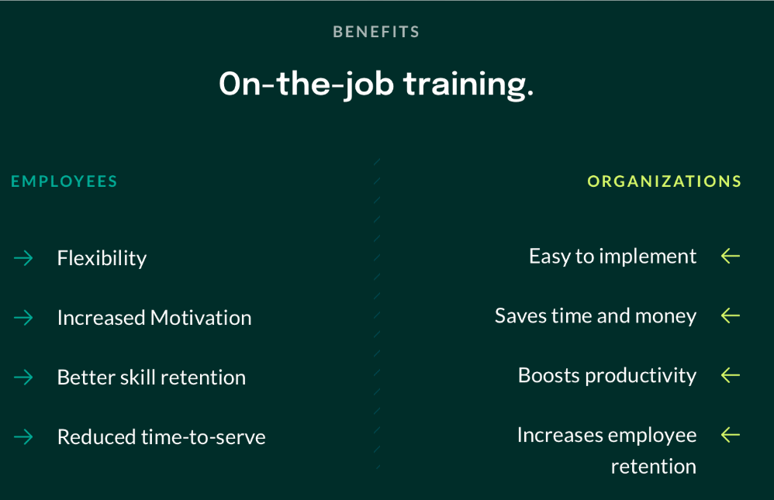
On-the-job training uses methods that involve hands-on experience. Employees learn by physically interacting with the subject, rather than memorizing it from a Learning Management System.
Want to see it in action? Here’s how Thermon cut training time for new recruits in half.
Accessible and relatable employee training.
Our frontline workforce is the most diverse it’s ever been. It’s essential that we deliver training experiences that are relatable and usable across the spectrum.
1. Multimedia. Combining text with visual references like photos, videos, or gifs helps users complete tasks and retain information.
2. Mobile. Delivering job aids on mobile devices is effective as long as the content is simple, visual, and logical. Younger generations find it intuitive; older generations appreciate the logical flow.
Embracing AI.
AI tools can help organizations break complex data sets into manageable discrete parts, removing bottlenecks from the administrative end of frontline training.
Leveraging Digital Tools.
Digital tools play a significant role in enhancing the delivery of frontline training. They provide opportunities to improve accessibility, interactivity, and flexibility in training programs.
- Digital job aids. Digital work instructions explain the best way to complete a specific procedure.
- Learning Management Systems (LMS). Platforms that allow organizations to track progress and provide access to learning resources.
- Augmented and virtual reality (AR/VR). Technologies that provide realistic and immersive training experiences.