Shop Floor Chronicles
Real Stories, Battle-Tested Fixes, and Actionable Results.
Join L2L shop-floor veterans for a four-part series delivering practical solutions to your toughest plant challenges—from legacy equipment and "machine whisperers" to departmental friction and new-hire scrap spikes.
Airing the third Tuesday of each month, August through November @ 2 PM ET.

Explore a new topic in each session:
- August 18: Stopping the Downtime Cycle on Old Equipment
- September 15: The “Paperclip” Paradox: Is Your Hero Culture Killing Your Efficiency?
- October 20: Ending the Shop Floor "Cold War": A Blueprint for Production & Maintenance Alignment
- November 17: The "First Time Right" Shift: Helping New Hires Run Like Veterans
Get practical advice from people who've lived it.
Inside the Series: What We’ll Cover
Episode 1: Stopping the Downtime Cycle on Old Equipment
When your 1960s legacy equipment runs (even if it sounds like a T-Rex), it’s the sound of money. When it doesn’t, you're living in the stone ages, thumbing through paper logbooks, hunting for obsolete parts on eBay, and losing tribal knowledge because your veteran technician just retired.
Without real-time data, you only learn the "score of the game" at the end of the week. That means endless finger-pointing, delayed morning meetings, and compounding downtime costs. The good news? You don’t need to spend millions replacing legacy iron to get modern visibility.
What We’ll Cover:
-
Ditching the Paper Logbooks: Moving away from filing cabinets and scattered spreadsheets into a single, shared "System of Action" for engineers, operators and leadership.
-
The No-PLC Workaround: Low-cost, practical ways to attach simple sensors (vibration, condition monitoring) to vintage machines to catch failures weeks out, minus the IT headache.
-
Knowing the Score During the Game: Digitizing production and downtime events in real time to eliminate shift-change finger-pointing.
-
From the Boneyard to Continuous Improvement: Using real-time data and AI to track recurring trends, improve maintenance planning, and decide when to repair vs. replace.
Stop chasing tribal knowledge and losing production hours.
Episode 2: The “Paperclip” Paradox: Is Your Hero Culture Killing Your Efficiency?
Every plant has a "MacGyver." You know exactly who they are, the veteran technician who can resurrect a million-dollar machine with a paperclip, a zip-tie, and a prayer. When they swoop in and save the day, everyone cheers. But here is the brutal truth: relying on individual miracles is a silent killer.
If your operational strategy depends on "machine whisperers" rather than a standardized system, you aren't running a modern manufacturing plant, you’re running an emergency room. You are always one retirement, one sick day, or one vacation away from an operational crisis. While your heroes run from fire to fire, your productivity is burning up, and your profits are taking the hit. You can't scale a business on folklore and duct tape. To build a predictable, profitable operation, you have to transition from "Hero Culture" to a digital "System of Action."
What We’ll Cover:
- Ditching the "MacGyver" Dependency: How to stop losing precious production hours waiting around for the only person on the shift who knows the secret trick to fix a machine.
- Codifying the Magic: Practical, no-nonsense steps to extract decades of "tribal knowledge" out of your veteran’s heads and into digital standard work that anyone can follow.
- Bridging the Skills Gap in Days, Not Months: How to use AI-powered, interactive checklists to get green new hires to "First Time Right" performance without weeks of expensive shadowing.
- Retiring the Whiteboard and Red Pen: Why dry-erase boards and hand-written logs are actually masking your biggest downtime trends, and how to build a dynamic, digital "System of Action" that drives accountability.
Stop waiting for miracles. Start building a system.
Episode 3: Ending the Shop Floor "Cold War": A Blueprint for Production & Maintenance Alignment
Production lives by the schedule; Maintenance lives by the machine.
Production wants to keep the line humming at all costs to hit today's yield targets. Maintenance wants to pull the line offline right now so a $20 bearing doesn't turn into a $200,000 catastrophic failure. The result? An ongoing, exhausting "Cold War" on the shop floor, complete with finger-pointing at shift changes, ignored work orders, and endless morning-meeting drama.
This constant tug-of-war isn't just a personality clash between department heads - it’s a silent 20% leak in your plant's overall capacity. When your production schedule is built around unrealistic backlogs without factoring in critical maintenance windows, you aren’t actually maximizing output. You’re just scheduling your next multi-day breakdown.
It’s time to sign a peace treaty. High-performing plants don't force Production and Maintenance to choose between throughput and equipment reliability, they align them around a single, real-time source of truth.
What We’ll Cover:
- Ending the "He Said / She Said": How replacing whiteboards, paper logs, and conflicting shift reports with a shared, real-time "System of Action" creates complete transparency between Production and Maintenance.
- Turning "Emergency Fixes" into "Planned Wins": How to build a unified schedule that protects machine health without blowing up delivery deadlines, keeping the line moving without the 2:00 AM surprises.
- Mastering High-Speed Changeovers: Moving away from inconsistent, operator-dependent setups and adopting standardized, repeatable routines to slash changeover downtime.
- Stopping the "Downtime Spiral": The real math behind why skipping a 30-minute check today guarantees a 30-hour nightmare next week, and how to stop the cycle for good.
Stop fighting over schedule vs. machine. Start building a unified plan for reliability.
Episode 4: The "First Time Right" Shift: Helping New Hires Run Like Veterans
The machine is running flawlessly, but every part coming off the conveyor is headed straight for the scrap bin. Sound familiar?
When quality drops, the default reaction is often to blame the equipment. But more often than not, the real culprit is a training gap. With high turnover and an unprecedented influx of green operators, most plants are relying on "hope-based training." They pair a new hire with an overloaded veteran for a few days of unstructured shadowing, hand them a 50-page paper binder nobody reads, and hope for the best.
The result? Recurring "rookie mistakes," massive startup scrap spikes after shift changes, and constant friction between the shop floor and the quality lab. Quality isn't a lab problem; it's a frontline execution problem. You can't inspect quality into a product at the end of the line—you have to build it in at the source. To eliminate costly scrap and get new hires operating at veteran speed, you have to replace static training with real-time, interactive standard work on the floor.
What We’ll Cover:
-
Eliminating "Startup Scrap": How to standardize line setups and shift handovers so every changeover is executed "First Time Right," no matter who is operating the machine.
-
Ditching the Binders and "Shadowing": Moving away from static paper SOPs and passive shadowing toward interactive digital help that guides operators directly when the supervisor isn't looking.
-
Turning Operators into the First Line of Defense: Empowering operators to detect quality drifts early and perform basic inspections before parts ever make it to the scrap bin.
-
The Pride Factor & Standard Work: Why digital standard work makes daily tasks easier, reduces operator stress, and turns "red" shift dashboards green.
Stop hoping for quality. Start building a frontline team that owns the results.
Our Speakers
Meet your guides. Each webinar features a tag team of L2L experts who have sat in your chair and tackled the same daily plant hurdles. Expect real-life examples, hard-earned war stories, and practical insights from veterans who know what it takes to drive real results.

Curtis Bird
Director of Implementations
Curtis Bird is Director of Implementations at L2L. With 28 years in automotive maintenance engineering and nearly a decade guiding L2L software rollouts, Curtis brings a rare combination to the floor: he’s lived the exact equipment headaches digitization is meant to fix, and he knows how to turn plant-floor data into real, measurable uptime.

David Pugh
Sales Solutions Engineering
David Pugh is a Senior Manufacturing Solutions Engineer at L2L with over 15 years of hands-on experience in engineering, lean improvement, and automation. He specializes in bridging the gap between shop-floor reality and modern technology, giving operators and leaders practical visibility that drives measurable results.

Eric Whitley
Sales Manufacturing Solutions Engineer
Eric Whitley is an Operational Excellence implementation professional at L2L with over 25 years of manufacturing and business improvement experience. Dedicated to helping industrial clients reach their business goals through the implementation of culture change, principled leadership, and proven improvement techniques.
Orlando Rameriz
Implementation Consultant
Orlando is an ERP Business Analyst at L2L specializing in manufacturing system optimization, multi-site process design, and software deployment. With a proven track record of successfully implementing L2L across plants nationwide and deep expertise in SAP ECC, he helps manufacturers integrate complex systems to drive real operational efficiency.
Bret Rodenbeck
Manufacturing Solutions Engineer
As a Manufacturing Solutions Engineer at L2L, Bret brings 30+ years of experience in maintenance, reliability, and enterprise software implementation. He specializes in translating complex plant floor challenges into clear, data driven solutions using master data design and practical process optimization.
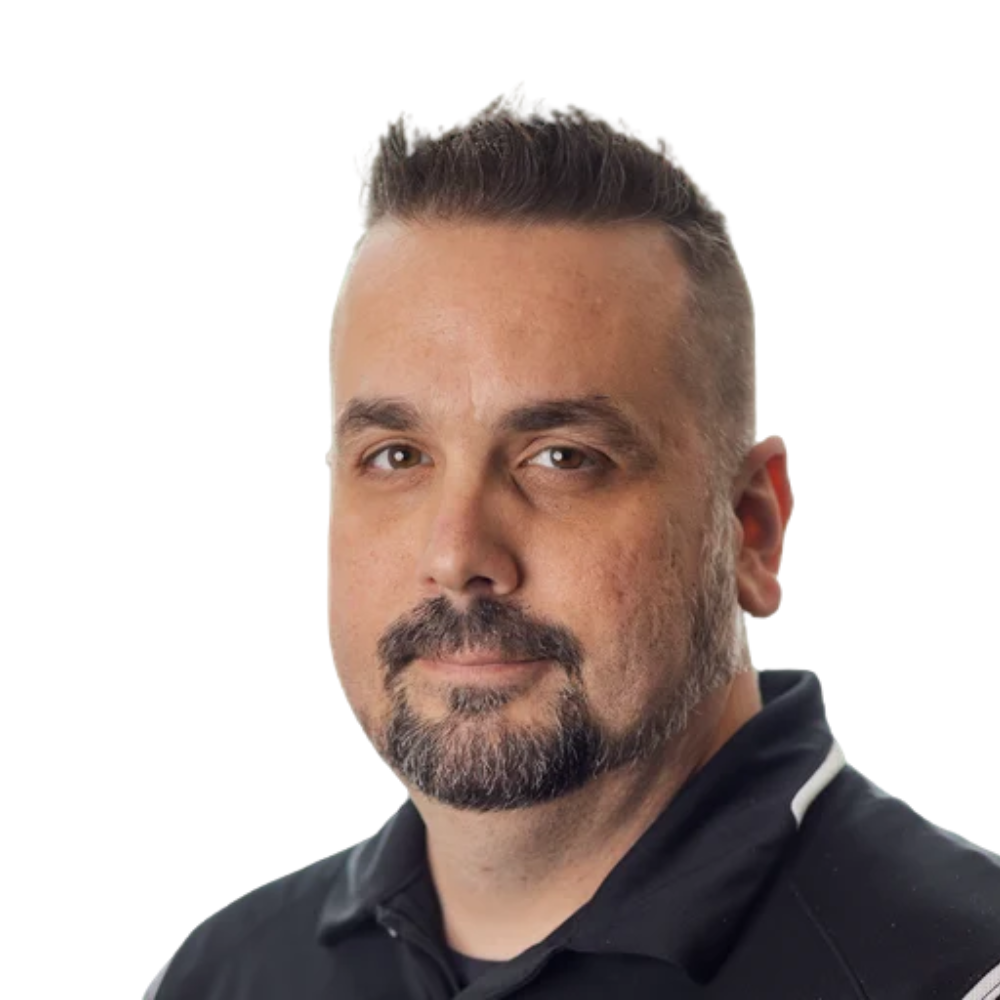
Nate Holman
Manufacturing Solutions Engineer
Nate is a Manufacturing Solutions Engineer at L2L with 17 years of hands-on automotive manufacturing experience. Having served as a Production Supervisor and Supply Chain Manager, he spent over a decade mastering L2L on the shop floor as a power user before joining the team to help plants eliminate operational friction and drive measurable performance.