

.svg)
 Shop floor execution
 Maintenance
 Production
 Skills
.png?width=60&height=60&name=chart-line-up%20(1).png) Manufacturing Intelligence
Manufacturing Intelligence
 Automotive
 Building materials
 Packaging
 CMMS/EAM
 MES
MES
 Connected Worker
 Manufacturing Intelligence
 Case studies
 Blog
Blog
 Ebooks & Guides
 Webinars
 Events
.svg) OEE Calculator
OEE Calculator
 Downtime Cost Calculator
 About Us
 Partners
 Newsroom
 Support
 Careers
 Trust center


.svg)

.avif)
For years, manufacturing executives held to a familiar myth: the air-gapped shop floor.
The logic was simple enough. If operational technology (OT) isn’t connected to the corporate internet, it can’t be breached. But as we navigate the digital realities of 2026, that boundary has completely dissolved. Connected Industrial Internet of Things (IIoT) sensors, cloud-native operational software, and remote vendor access have moved the plant floor directly into the line of fire.
Manufacturing IT leaders can no longer just protect databases or corporate email networks. They must now defend production uptime, physical assets, and human safety. When a line goes quiet because of a system compromise, it’s not just an IT problem. It’s a massive financial leak that disrupts global supply chains and threatens market trust.
Achieving operational excellence means realizing that corporate IT can’t function as a reactive help desk for plant floor disruptions. It must act as a strategic engine for secure manufacturing growth.
The new blast radius: Production uptime is the ultimate target
Threat actors have figured out that while a business might survive its back-office systems being offline for a few days, it can’t fully recover from a dead assembly line. Ransomware and extortion groups are moving past traditional data theft to target the operational software driving the floor.
Worse, they aren’t relying on complex software exploits to get inside—just stealing or brute-forcing corporate identities. The massive FortiBleed credential harvesting campaign of June 2026 proved that weak password hygiene and a lack of multi-factor authentication (MFA) on public-facing firewalls are all an adversary needs to bypass a perimeter defense. Additionally, threat intelligence notes a massive surge in identity-driven attacks explicitly targeting the manufacturing sector.
When hackers steal an active vendor credential or a legacy maintenance login, they can walk right through it, looking like a trusted partner. If that login gives them access to shop floor software, they can deploy ransomware across physical servers or alter critical machine parameters in seconds.
Eradicating hidden workloads and shadow IT
When corporate IT security protocols are too rigid or slow to deploy, plants protect themselves by deploying shadow IT. Local operations teams buy point solutions or build homegrown spreadsheets to manage local workflows. This creates a sprawling constellation of unvetted, unpatched applications that represent massive vulnerabilities in the network ecosystem.
To counter this, IT must provide an operational layer that balances strict corporate governance with local plant autonomy. We need a model where configuration is operations-led but IT-governed:
- Business-owned workflows: Plant teams must have the power to configure their daily forms and operational workflows without needing an IT ticket for every tactical change.
- Consolidated architectures: Replacing dozens of legacy, fragmented niche apps with a single, hardened enterprise platform minimizes the overall attack surface.
- Maintenance-free upkeep: Shifting shop-floor software to a modern SaaS model eliminates the hidden IT workload of server patching, local database backups, and manual version management.
Standardizing on enterprise-grade governance
If a piece of software touches our plant floor execution layers, its security cannot be an afterthought. SaaS applications on the shop floor have to meet the exact same rigorous standards as our core corporate ledgers.
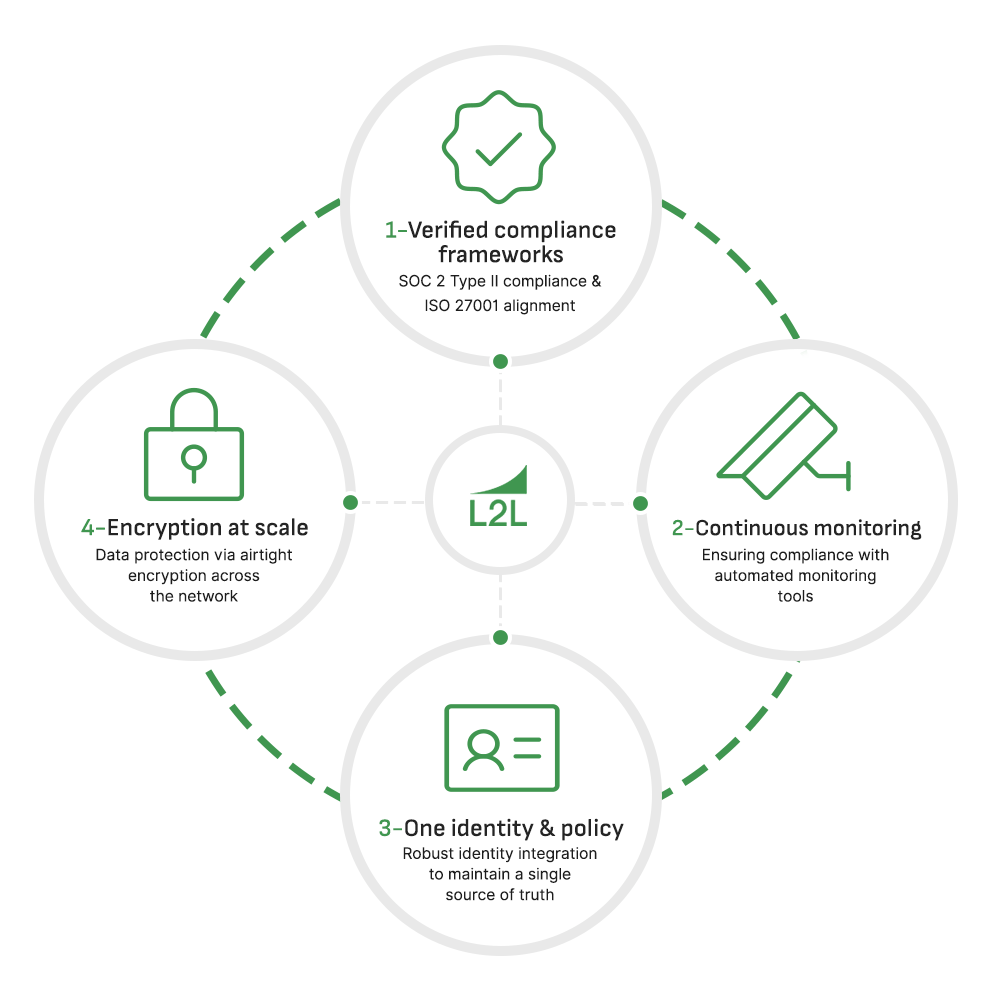
True industrial resilience relies on establishing a verifiable, Zero-Trust architecture built on these principles:
- Verified compliance frameworks: Any platform handling operational metadata must maintain SOC 2 Type II compliance and align directly with ISO 27001 best practices.
- Continuous monitoring: Trust isn’t static. Systems must use automated monitoring tools like Drata to provide real-time visibility into active security controls, ensuring that compliance posture never drifts.
- One identity, one policy: Shop floor applications must support robust identity integration like SAML 2.0 via Okta or Azure AD. By making the corporate identity provider the single source of truth, organizations can consolidate their security efforts, applying their most rigorous anti-harvesting defenses, like MFA and conditional access, to one centralized perimeter.
- Encryption at scale: All data must be fiercely protected using AES-256 encryption at rest and TLS 1.2+ encryption in transit across the entire operational network.
Navigating the industrial AI security minefield
The explosion of industrial AI tools across the manufacturing landscape has created a brand-new security headache for the C-suite. While predictive analytics and autonomous dispatches offer huge efficiency improvements, they also represent a potential intellectual property nightmare.
If frontline teams are inputting proprietary standard operating procedures (SOPs), machine blueprints, or scrap metrics into public AI models, they may be exposing corporate secrets to the public domain.
IT leaders must mandate a Zero-Training AI architecture. Contractual agreements with enterprise-grade AI providers must explicitly prohibit the use of plant data, queries, or performance metrics to train or fine-tune public baseline models. Data must stay logically isolated within a tenant, processed purely for real-time inference, and completely cited back to original source records for bulletproof auditability.
Securing the system of action
As IT and operations executives, we can't secure our future by looking backward or trying to rebuild obsolete air gaps. We have to secure the shop floor by providing our teams with an authorized, resilient, and enterprise-grade operational environment.
This is exactly why the L2L framework is outlined in our guide, L2L & IT: A Partnership for Operational Excellence. As the leader in Connected Manufacturing Operations, L2L doesn’t demand a risky rip-and-replace of legacy infrastructure. Instead, it acts as a secure, hardened operational layer—the intelligent connective tissue between core ERP systems and minute-by-minute plant floor execution.
L2L is engineered from the ground up to respect the absolute integrity of your corporate IT infrastructure. With native SOC 2 Type II auditing, real-time Drata security monitoring, SAML 2.0 identity integration, and a strict, contractually mandated Zero-Training AI model, L2L eliminates the threat of shadow IT while completely removing the tactical help desk burden from your IT department.
By partnering with a platform built to enterprise standards, IT leaders can stop running local plant support desks and start leading the secure digital transformations that move the entire business forward. You can learn more about our full security certifications, architecture briefs, and system uptime metrics on our Security & Compliance page.