


.svg)
 Shop floor execution
 Maintenance
 Production
 Skills
.png?width=60&height=60&name=chart-line-up%20(1).png) Manufacturing Intelligence
Manufacturing Intelligence
 Automotive
 Building materials
 Packaging
 CMMS/EAM
 MES
MES
 Connected Worker
 Manufacturing Intelligence
 Case studies
 Blog
Blog
 Ebooks & Guides
 Webinars
 Events
.svg) OEE Calculator
OEE Calculator
 Downtime Cost Calculator
 About Us
 Partners
 Newsroom
 Support
 Careers
 Trust center


.svg)


In many manufacturing environments, the spare parts storeroom is treated like an insurance policy. It's a collection of “just-in-case” assets intended to shield the plant from the impact of unplanned downtime. However, for most plant leaders, this policy has become prohibitively expensive.
Industry research suggests that the annual carrying cost of spare parts inventory often hovers around 20% of the total value. When parts sit on shelves for years, they’re not just stagnant assets, but growing financial liabilities. They consume floor space, require climate control, demand insurance coverage, and are subject to taxes and depreciation.
In this article, we’ll dive into what reducing spare parts inventory costs requires and how manufacturers can pivot from “product hoarding” to a data-driven, sustainable approach to inventory management.
Why most inventory reduction efforts fail
When corporate initiatives demand cost-cutting, the most common response is the “blanket cut.” For example, this could mean a flat 10% reduction in inventory across all categories. While this looks good on a balance sheet for one quarter, it’s a risky strategy.
Blanket cuts fail because they don’t distinguish between redundant stock and critical assets. For instance, cutting a low-cost but critical sensor might save a small amount today, but it costs tens of thousands in lost production tomorrow.
The result? A cycle of stockouts and last-minute procurement where the storeroom is depleted of the wrong things, leading to emergency shipping costs and extended downtime.

The logic of “safe reduction” and criticality
The goal isn’t to have the least amount of inventory but to have the right amount. A sustainable approach relies on finding the “sweet spot” between storage costs and downtime risk.
For example, if a facility holds a high-value motor for five years without using it, the carrying costs have likely already exceeded the motor's original value. If that motor is easily accessible from a local vendor with a short lead time, holding it in-house is a financial leak.
Sustainable reduction requires a “criticality audit” that weighs:
- Lead time: How fast can a replacement arrive?
- Impact: How many lines go down if this part fails?
- Frequency: How often does this part actually fail according to historical maintenance data?
Only carrying what’s needed—even operating on a Just-in-Time model—is a crucial step for reducing inventory costs and eliminating waste in the inventory management process.
Eliminating duplication in multi-site environments
For global manufacturers, significant savings are often hidden within disconnected systems. Identical parts frequently hide under different internal SKUs across various plants.
By establishing enterprise visibility, organizations can shift from local safety buffers to an inventory pooling model, which optimizes inventory levels for cost savings and improves supply chain coordination across sites.
Key strategies of this approach include:
- Asset visibility: Site A does not need to hold three spare gearboxes if Site B—just fifty miles away—has four available.
- Standardization: Using a single source of truth allows leaders to see that a part in one plant is identical to a part in another, allowing for a drastic reduction in redundant safety stock across the entire organization.
Inventory pooling, or “risk pooling,” enables manufacturers to easily share inventory among sites that are close in proximity. It’s an especially useful strategy for reducing lead times and shipping costs.
Bridging the gap: connecting maintenance data to the storeroom
Inventory management can't exist in a vacuum. To reduce costs sustainably, the storeroom must be digitally tethered to the maintenance plan.
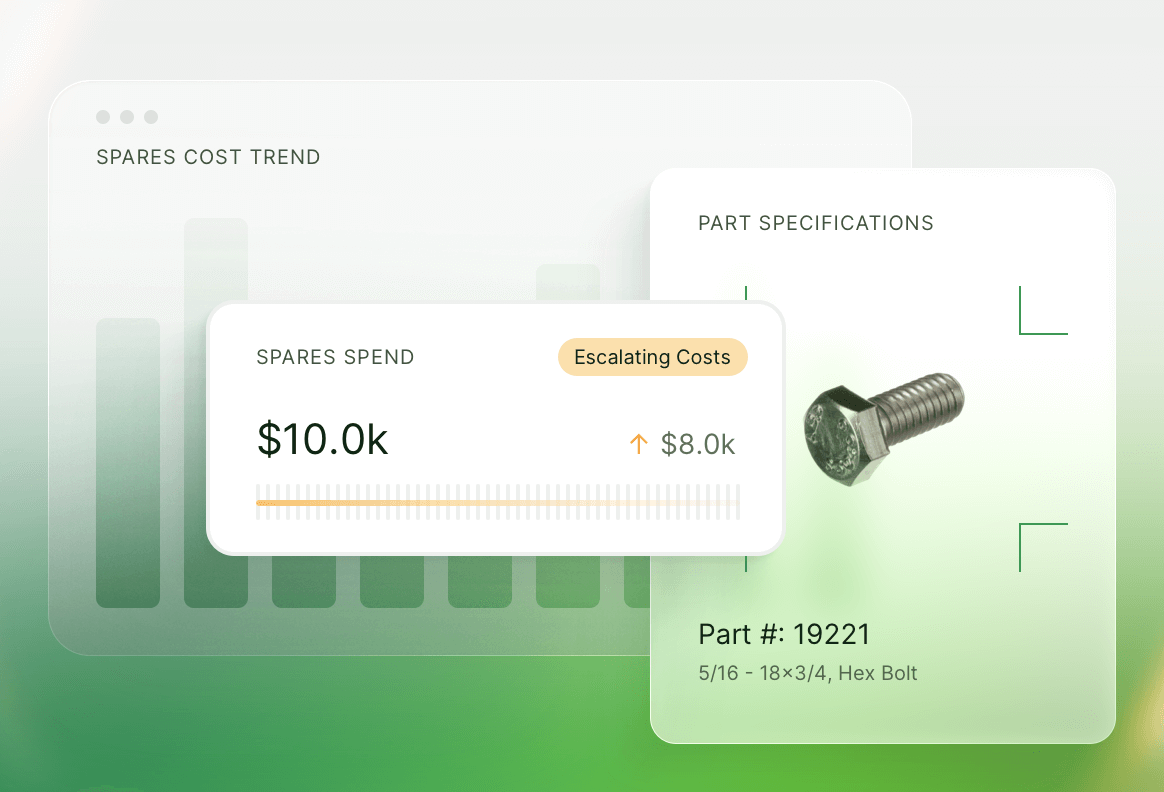
When a facility uses real-time usage data, tracking actual machine run hours and cycles, it moves from guessing to knowing.
- Just-in-Time ordering: Instead of keeping parts for a six-month PM on the shelf for the entire year, a connected system triggers an order weeks before the scheduled maintenance event based on verified lead times.
- Predictive intelligence: By connecting plant floor data directly to inventory systems, the facility ensures the part arrives exactly when the technician needs it, which reduces on-shelf time.
Real-time operational data is crucial for effective inventory management. It not only prevents stockouts and over-ordering but also minimizes associated costs (and frustration) in the long run.
Identifying and purging “dead stock”
Every year, manufacturers pay an administrative burden for parts that belong to machines no longer in service. “Dead stock” is a primary driver of inflated inventory costs.
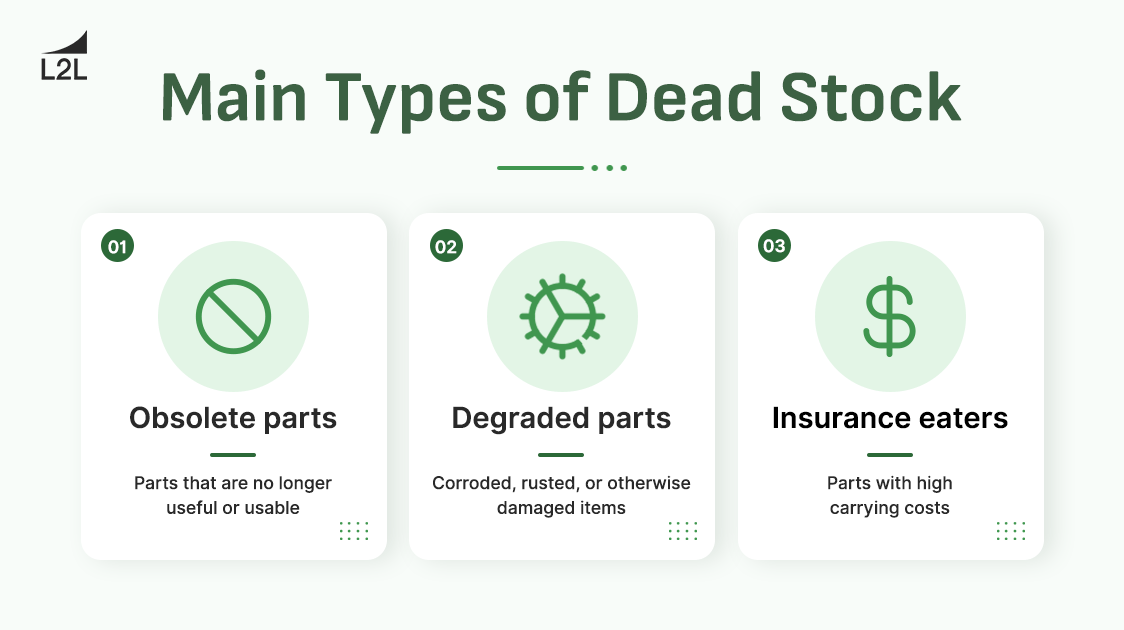
A sustainable approach requires a rigorous audit to purge. This includes eliminating degraded and obsolete parts, like components for decommissioned equipment or corroded equipment. Getting rid of “insurance eaters”—items that serve no purpose other than increasing the plant's insured value and tax liability—is also important for reducing inventory costs.
Removing human bias through automated replenishment
Hoarding is often a human response to negative past experiences. For example, a technician remembers a time when a missing bolt kept the line down for days, so they now keep hundreds of them in a private drawer.
To scale, manufacturers must remove this emotional bias. Automated replenishment triggers based on actual consumption and verified lead times prevent impulsive ordering. When a system handles the routine parts of inventory management, it ensures that stock levels remain lean without risking the plant’s performance.
From cost center to strategic asset
Reducing spare parts inventory costs is not a one-time event; it is a shift in institutional intelligence. Connectivity makes reduction safe. By bridging the gap between the shop floor, the maintenance office, and the storeroom, manufacturers transform a massive cost center into a lean, strategic asset.
Learn more about how L2L provides the intelligence layer that justifies leaner stock levels and eliminates the blockers to your productivity.